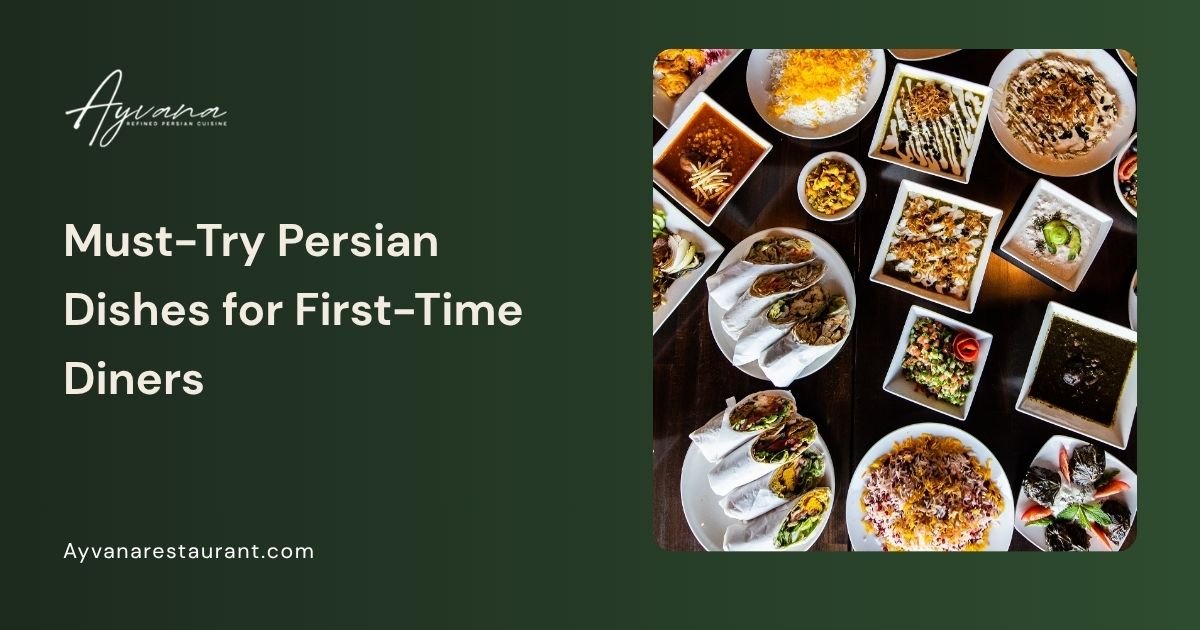
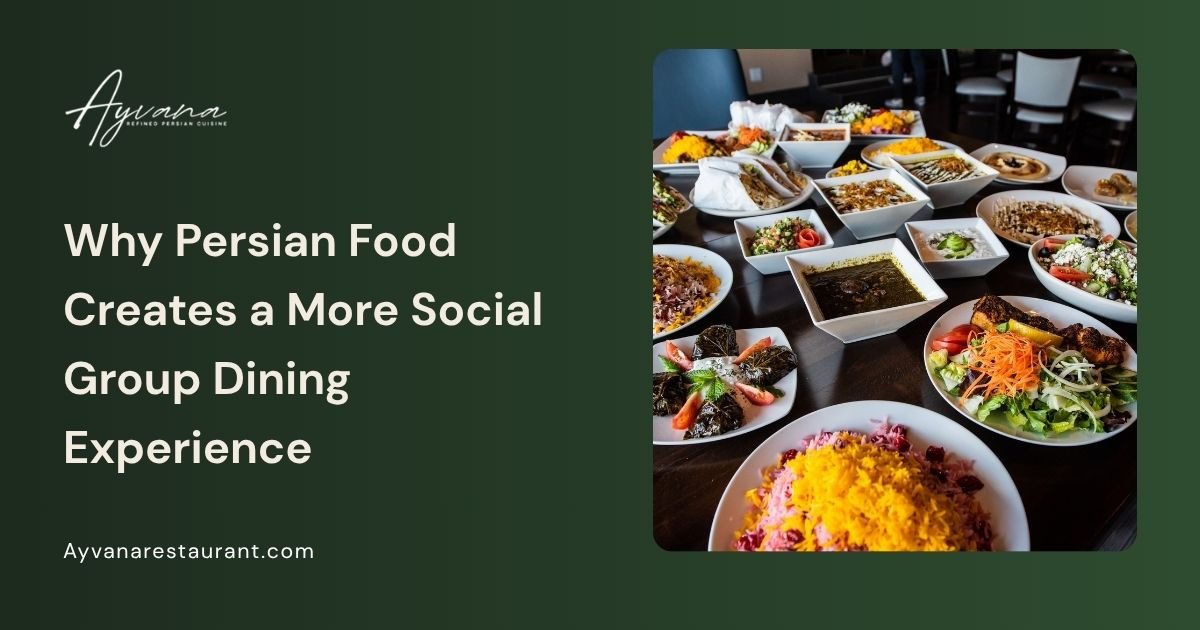
One of the biggest challenges with group dining is finding food that feels easy to share while still satisfying different tastes and dietary preferences.
Persian cuisine naturally solves many of these problems because it is traditionally built around communal dining and hospitality. Instead of individual plates separating the table, Persian meals are centered around shared platters of kebabs, saffron rice, tahdig, appetizers, and stews designed for everyone to enjoy together.
This family-style approach encourages conversation, flexibility, and a more connected atmosphere during family gatherings, office dinners, birthdays, and celebrations.
Throughout Los Angeles and the San Fernando Valley, Persian food remains a popular choice for group dining because it combines generous portions, balanced flavors, and hospitality traditions that naturally bring people together around the table.
Here is the Quick Answer:
Persian cuisine is ideal for group dining because it centers around shared plates, family-style serving, and hospitality traditions that encourage conversation and connection. Mixed grill platters, saffron rice, appetizers, and stews make it easy to satisfy different preferences for birthdays, office dinners, and family gatherings. In Tarzana, Ayvana Persian Restaurant offers authentic Persian group dining with shareable platters, catering, and private dining options.
What makes a cuisine ideal for group dining?
A successful group dining experience depends on more than simply choosing a popular restaurant. The best food for group dining usually makes sharing easy, accommodates different preferences, and creates a comfortable social atmosphere for everyone at the table.
The cuisines that work best for large gatherings often include:
- Shared plates and communal serving styles that encourage interaction
- Flexible portions that make ordering easier for groups
- Variety for different dietary preferences and comfort levels
- Balanced flavors that appeal to a wide range of guests
- Easy pacing for large tables so meals feel relaxed rather than rushed
- Family-style formats that reduce ordering stress
- Comfortable, conversation-friendly dining atmospheres
- Options for vegetarian, halal-friendly, grilled, and lighter meals
When these elements come together, the meal becomes part of the gathering itself instead of simply individual orders placed side by side.
Some cuisines can become more difficult for groups because they rely heavily on:
- Individually plated entrées
- Limited shareable options
- Inconsistent serving times
- Complicated customization for larger parties
- Smaller portions that are harder to divide across the table
These challenges can make large dinners feel less connected and more difficult to coordinate, especially during birthdays, office gatherings, or family celebrations.
Persian cuisine naturally solves many of these group dining challenges through its serving style, hospitality traditions, and menu structure.
Unlike dining formats built primarily around individual entrées, Persian meals are often designed to be experienced collectively. Shared platters, large-format rice dishes, and table-centered appetizers reduce ordering complexity while giving guests more variety. This structure helps larger groups coordinate more easily and creates a dining experience that feels more connected and interactive.
Why Persian Food Naturally Encourages Sharing
Persian cuisine is naturally built around gathering, sharing, and hosting. From large kebab platters and saffron rice to shared appetizers and family-style serving traditions, many Persian meals are designed to bring people together and create a more social group dining experience.
Large Platters and Communal Serving Traditions
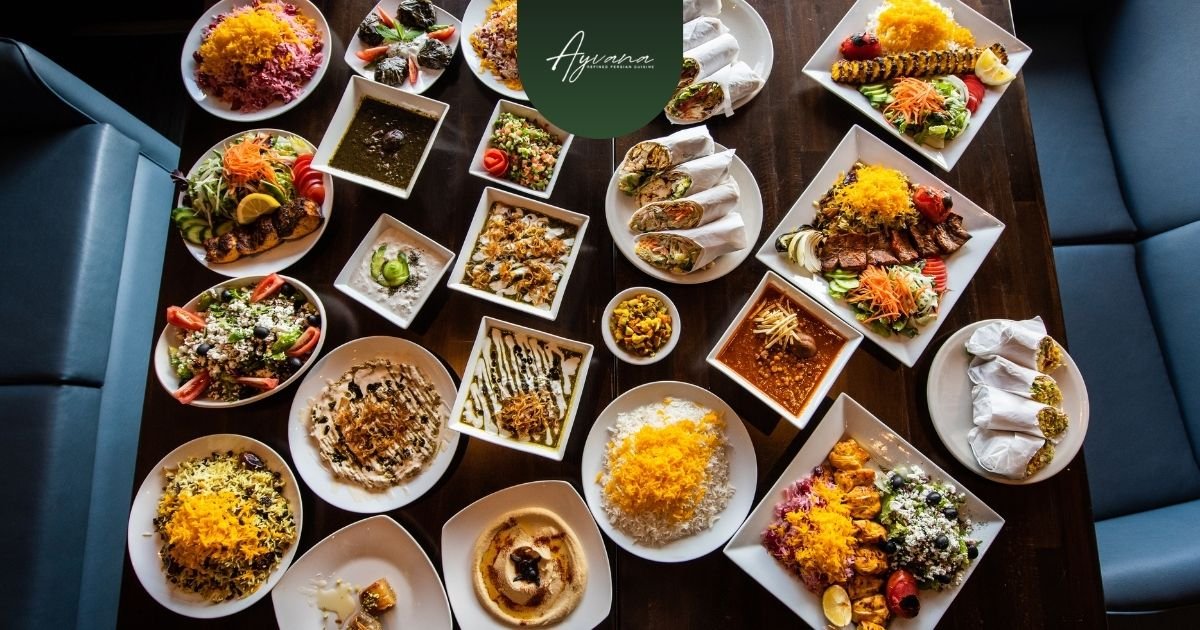
One reason Persian food works so well for groups is its emphasis on large-format serving. Instead of individual meals arriving separately, many Persian restaurants serve family platters and shared kebab plates designed for the entire table.
Popular dishes like koobideh kebab, barg kebab, and soltani are often ordered together and shared across the group. This centralized serving style:
- reduces complicated ordering decisions,
- allows guests to sample multiple dishes,
- creates easier portion flexibility,
- encourages table interaction throughout the meal.
Rather than dividing the table into separate dining experiences, shared platters help everyone participate in the same meal together.
Rice Dishes Designed for Multiple People
Persian rice dishes are also designed for sharing. Saffron rice is commonly served in large portions that can easily be divided across the table alongside grilled meats, stews, and appetizers.
Tahdig, the crispy layer of rice often served as a centerpiece item, also encourages sharing because it is typically placed in the center for everyone to enjoy together.
These dishes create a flexible base for large groups without making ordering feel overly structured or restrictive.
Mixed Grill Combinations Create Variety
One of the biggest challenges in group dining is balancing different tastes within a single order. Persian mixed grill platters simplify this by combining multiple proteins and flavors on one serving arrangement.
A shared platter may include:
- koobideh,
- shish kabob,
- chicken kabob,
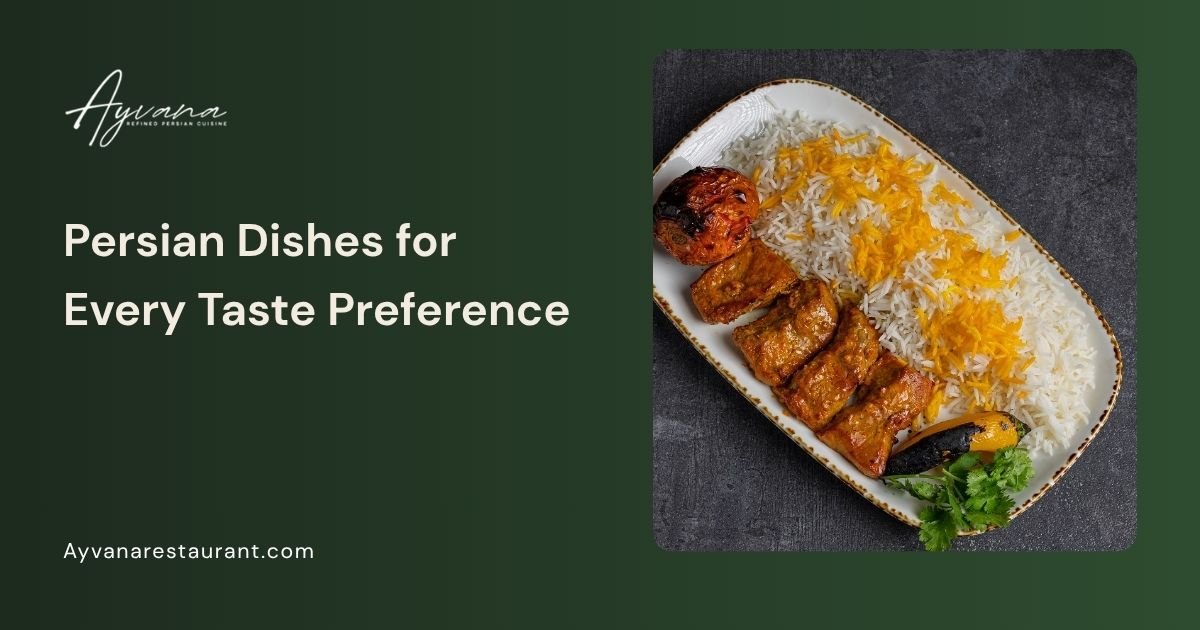
- saffron rice,
- grilled vegetables.
This variety makes Persian food especially practical for groups because guests can customize their plates without requiring entirely separate meals. For people wondering what to order for a big group or looking for foods everyone likes, mixed grill combinations often provide an easy solution.
Meze and Appetizer Culture Encourages Interaction
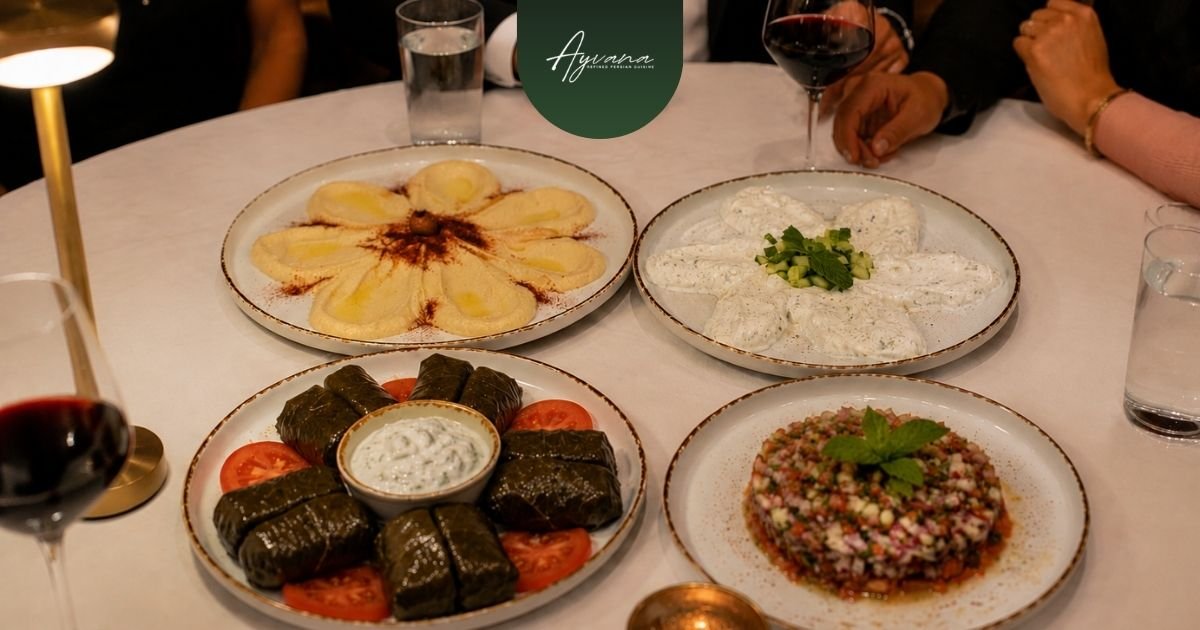
Persian dining also includes a strong culture of shared appetizers and small plates that help groups settle into the meal gradually. Dishes like mast-o-khiar, shirazi salad, and dolmeh are commonly placed around the table for casual sharing before main courses arrive.
These smaller dishes help create:
- relaxed pacing,
- conversation between guests,
- interactive dining,
- a more welcoming atmosphere.
Instead of rushing directly into entrées, the meal unfolds socially through multiple shared dishes and courses.
Persian hospitality is built around gathering
At the center of Persian dining traditions is hospitality. Meals are often viewed as opportunities to welcome guests, strengthen relationships, and express generosity through food. Hosts typically place a strong emphasis on abundance, ensuring there is enough variety and quantity for everyone at the table.
Persian gatherings commonly feature multiple dishes served at once, allowing guests to sample different flavors throughout the meal. Offering food generously and encouraging guests to enjoy more is often considered part of making people feel comfortable and valued.
These traditions have shaped the way Persian meals are served today, helping create dining experiences that feel welcoming, generous, and naturally suited to larger groups.
Persian dining is built around hospitality and togetherness
Persian dining has long been associated with celebrations, family occasions, and bringing people together around a shared table. Birthdays, graduations, holiday gatherings, anniversaries, and family reunions are often centered around large meals where multiple generations dine together.
Because the meal is designed to be shared, guests can participate at their own pace while remaining part of the larger gathering. Rather than separating into individual dining experiences, the table becomes a focal point for conversation, storytelling, and connection.
This emphasis on togetherness is one reason Persian cuisine continues to be a popular choice for group celebrations and special occasions.
The variety of Persian food makes groups easier to satisfy
One of the biggest group dining challenges is finding food that works for different tastes and preferences. Persian cuisine naturally makes this easier by offering a wide variety of dishes that can be shared across the table.
A typical Persian meal may include:
- grilled meats like koobideh and chicken kabob,
- saffron rice and tahdig,
- traditional stews,
- fresh salads,
- yogurt-based sides,
- vegetarian-friendly appetizers.
This variety helps groups order communally while still giving everyone flexible options.
Persian food is also known for balanced flavors that feel flavorful without being overly spicy, making it approachable for families, children, and mixed groups. Combined with halal-friendly choices, grilled dishes, and lighter sides, Persian cuisine creates a dining experience that feels both satisfying and inclusive for large gatherings.
Family-style Persian dining creates a better social experience
Family-style Persian dining encourages interaction in ways that individually plated meals often do not. Shared platters naturally create moments where guests pass dishes, recommend favorites, and engage with one another throughout the meal.
This style of dining also reduces the pressure of making separate ordering decisions for every guest. Large platters of kebabs, rice dishes, appetizers, and stews allow groups to enjoy greater variety while keeping the experience simple and collaborative.
For larger gatherings, the food becomes more than a meal. It becomes part of the social experience itself, helping create a relaxed atmosphere where conversation and connection develop naturally.
Best Persian Dishes for Group Dining
Persian cuisine offers a wide range of family-style dishes that work naturally for larger tables, including:
Mixed Grill Platters
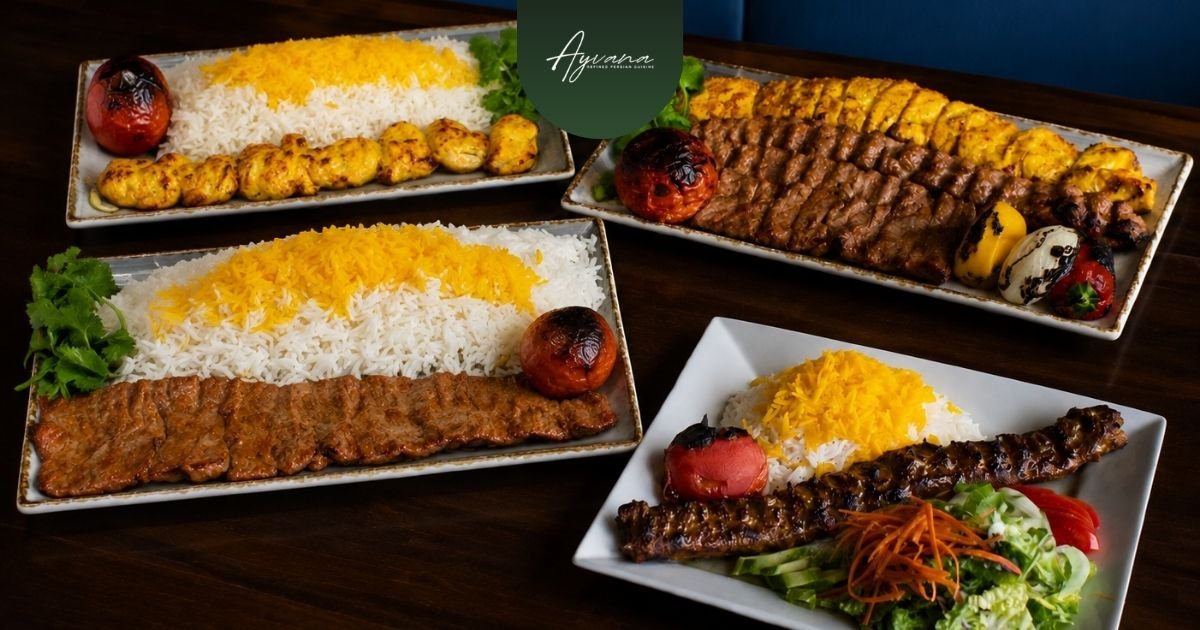
Mixed grill platters are one of the easiest ways to order for a group because they combine several proteins and sides on one shared serving.
Koobideh — Ground beef or beef-and-lamb kebabs with a soft texture and mild seasoning that appeal to a wide range of guests.
Barg — Thinly sliced grilled filet kebab often chosen for its tender texture and simpler flavor profile.
Soltani — A combination plate that includes both barg and koobideh, making it ideal for guests who want variety.
Chicken Kabob — Marinated grilled chicken that adds a lighter protein option to the table.
These platters are practical for groups because they allow guests to sample different items without placing multiple separate orders.
Persian Rice Dishes
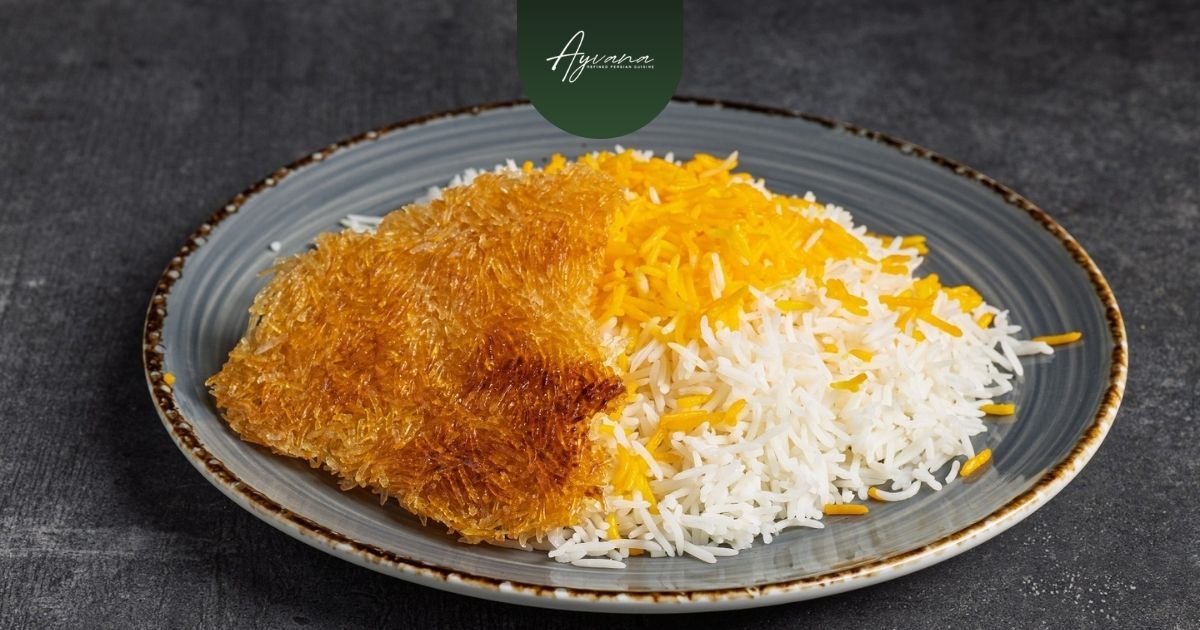
Rice plays a central role in Persian family-style dining and is usually served in large portions for sharing.
Saffron Rice — Fragrant steamed rice flavored with saffron that pairs well with kebabs, stews, and appetizers.
Tahdig — Crispy golden rice served as a shared centerpiece item that guests often divide around the table.
Rice dishes help balance the meal while making portions easier to scale for larger groups.
Persian Appetizers for Sharing
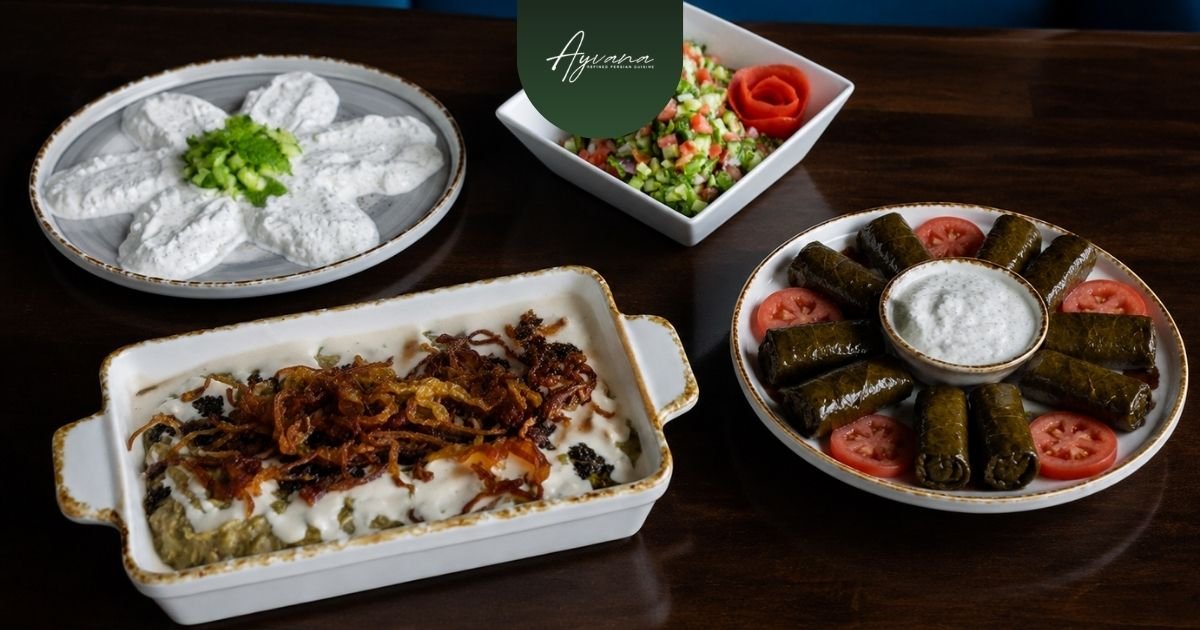
Persian appetizers are designed for casual communal eating and help create a slower, more social dining experience.
Mast-o-Khiar — Yogurt mixed with cucumber and herbs that adds a cool and refreshing contrast to grilled dishes.
Shirazi Salad — A fresh chopped salad with cucumber, tomato, onion, and citrus flavors that helps lighten the meal.
Kashk-e Bademjan — A traditional Persian eggplant dish made with kashk, onions, and mint that is commonly shared around the table.
Dolmeh — Stuffed grape leaves that work well as small shareable bites for the table.
These smaller dishes encourage conversation and allow guests to try multiple flavors throughout the meal.
Stews and Traditional Entrées
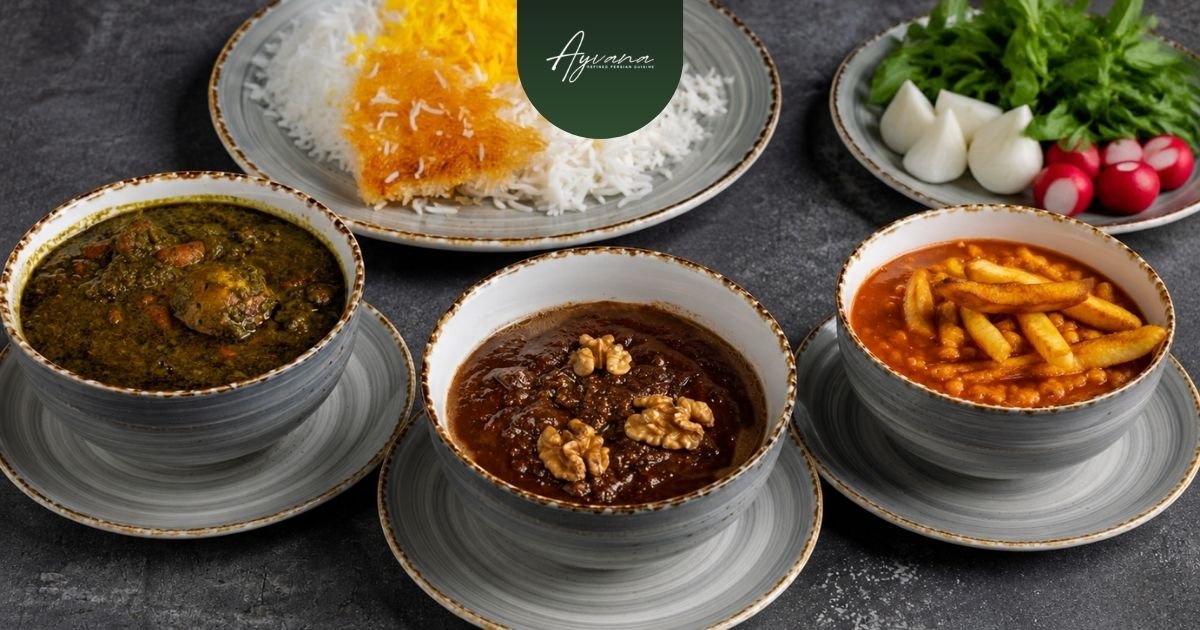
Traditional Persian stews add warmth and variety to group dining beyond grilled items alone.
Ghormeh Sabzi — A slow-cooked herb stew with beans and meat that is commonly served with rice.
Fesenjan — A rich stew made with walnuts and pomegranate sauce that adds deeper sweet-and-savory flavors to the table.
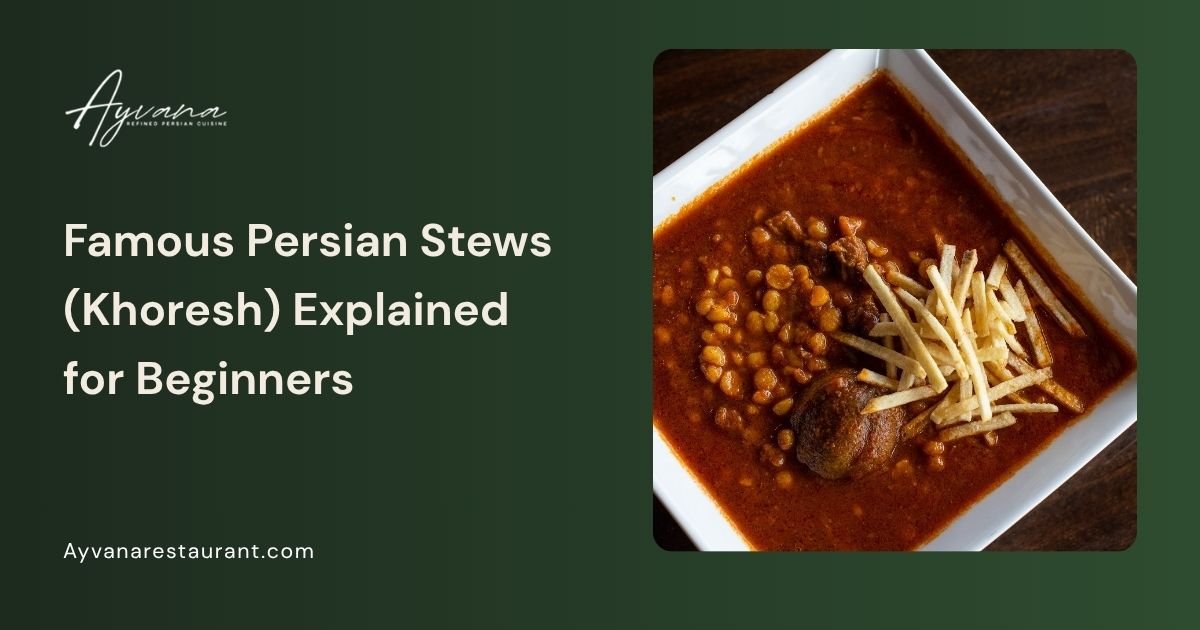
Gheymeh — A stew with beef and split peas cooked together in tomato sauce and topped with french fries often paired with saffron rice.
These comfort-style dishes help create a more balanced family-style meal for larger gatherings.
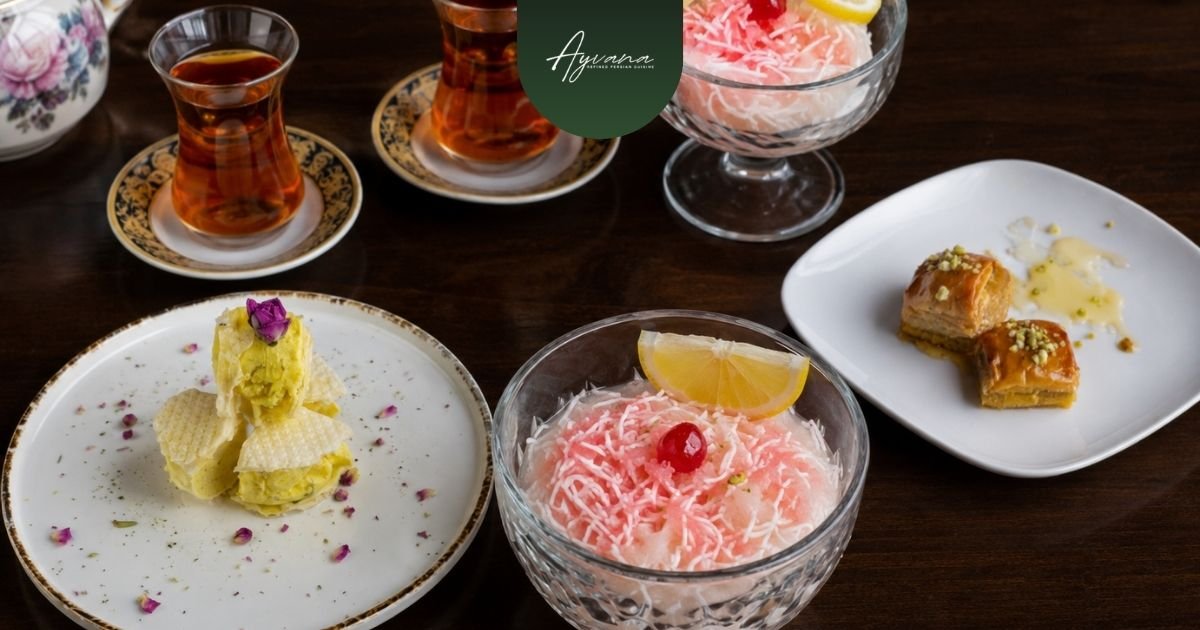
Desserts and Tea Service
Persian meals often end with tea and shared desserts that extend the social atmosphere of the gathering.
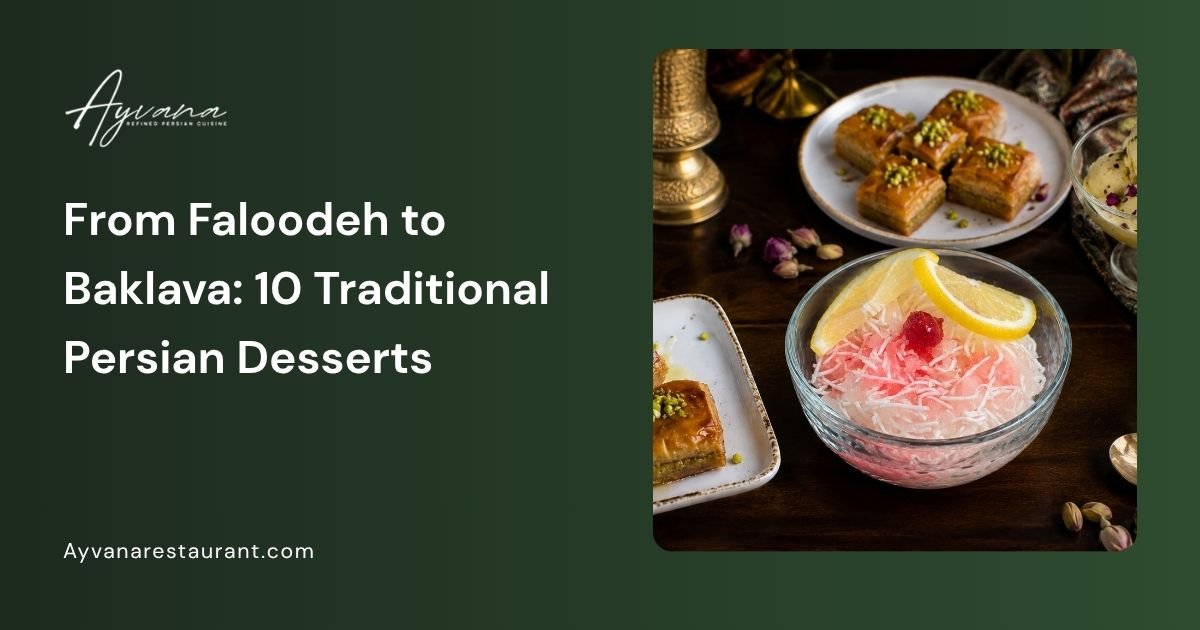
Baklava — Layered pastry dessert with nuts and syrup commonly shared around the table.
Persian Ice Cream — Traditional ice cream often flavored with saffron and pistachio.
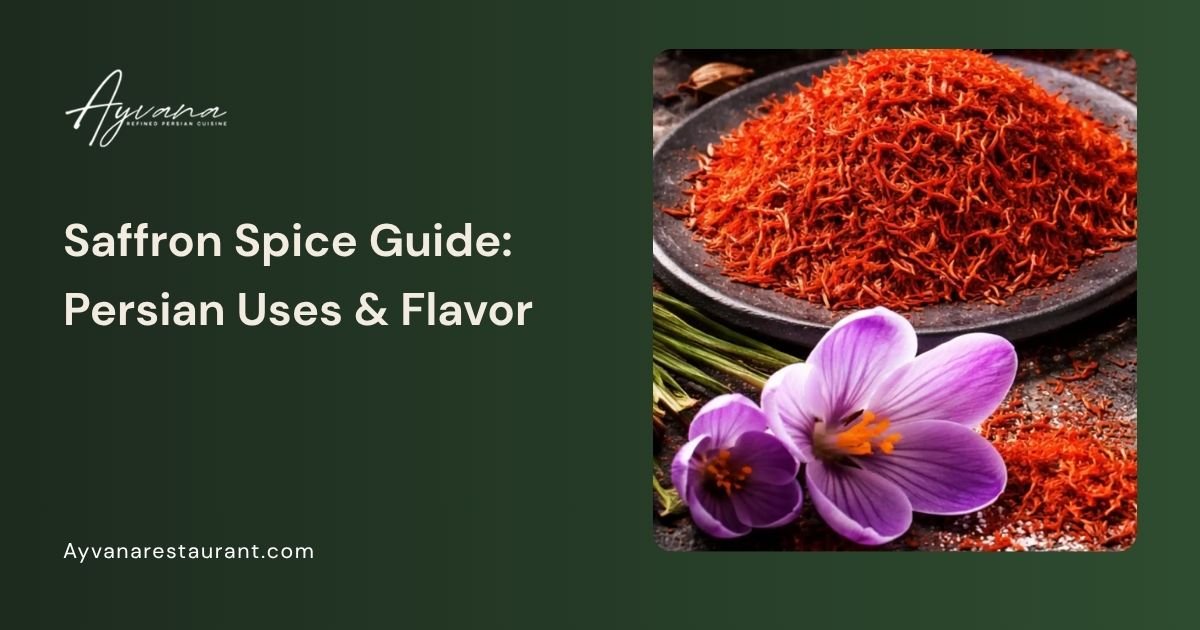
Saffron Desserts — Desserts that highlight floral saffron flavors commonly found in Persian cuisine.
Falloodeh — A chilled Persian dessert made with thin noodles and sweet syrup that works well for sharing.
Persian Tea — Traditionally served at the end of the meal to encourage continued conversation and gathering.
Enjoy a slower, more connected dining experience with shared Persian dishes at Ayvana Persian Restaurant in Tarzana.
Why Persian Restaurants Are Great for Celebrations and Events
Persian restaurants naturally work well for celebrations because the dining experience is centered around gathering, sharing, and hospitality. Large platters, family-style serving, and conversation-focused meals help create a more interactive atmosphere for birthday dinners, office parties, graduation celebrations, engagement dinners, family reunions, and holiday gatherings.
Unlike restaurants focused mainly on individual meals, Persian dining encourages guests to share platters, dishes, appetizers, and desserts together, making large group dining feel more connected and easier to coordinate.
Many Persian restaurants also accommodate celebrations through:
- large seating arrangements,
- catering options,
- shareable menu packages,
- flexible family-style ordering,
- warm and welcoming dining atmospheres.
For groups planning celebrations in Tarzana or throughout Los Angeles, Persian restaurants often provide a balance of comfortable hospitality, practical group dining, and a more social dining experience centered around gathering and connection.
Where to Enjoy the Best Group Dining Experience in Tarzana
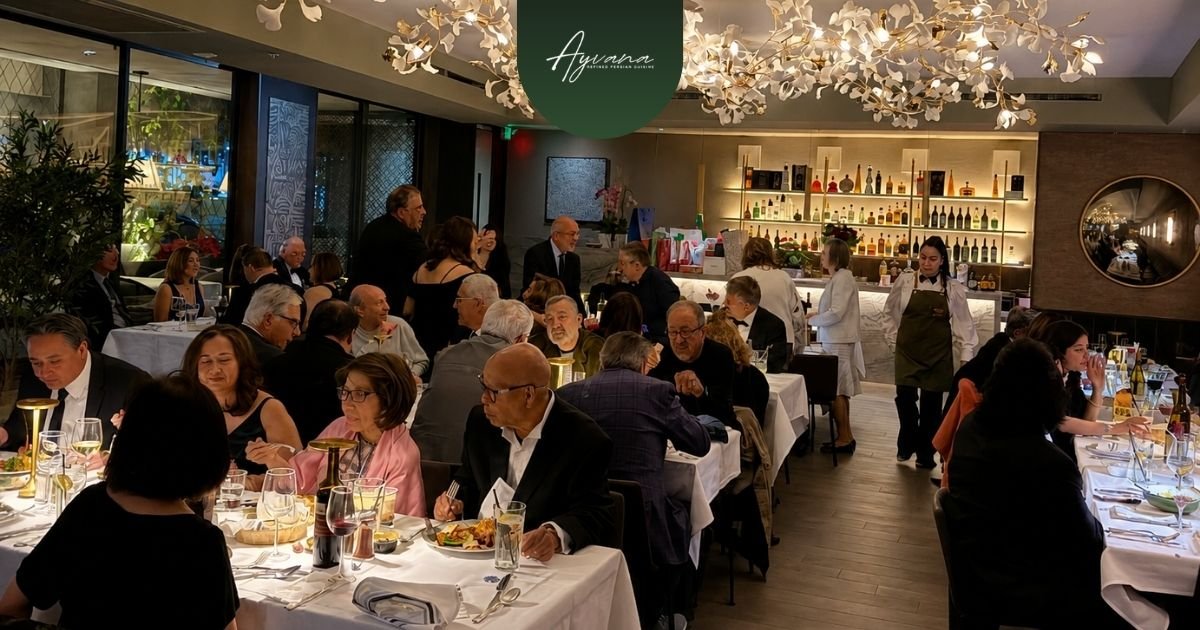
For groups looking to enjoy a more communal dining experience in Tarzana, Ayvana Persian Restaurant offers authentic Persian cuisine served through family platters, shared dishes, and traditional hospitality.
Grilled kebabs, saffron rice, appetizers, and Persian specialties naturally support conversation-focused group dining and celebrations.
Ayvana combines traditional Persian flavors with a refined modern dining atmosphere, attentive service, and elegant presentation. In addition to everyday dining, the restaurant also accommodates larger gatherings with catering options and a private dining space for up to 50 guests, making it well suited for group events in Tarzana.
What to Order at Ayvana for a Group
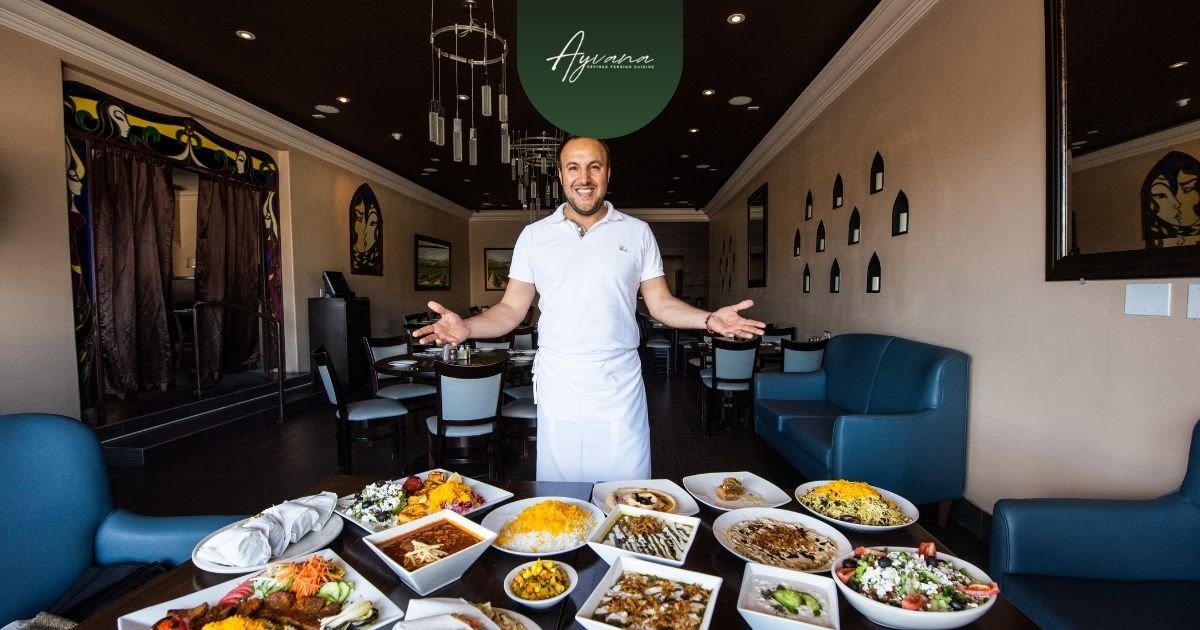
Not sure what to order for a larger table? One of the easiest ways to build a balanced Persian group meal at Ayvana Persian Restaurant is starting with shared appetizers, adding a few mixed grill platters, and finishing with desserts everyone can enjoy together.
Starter Spread
Want a table that feels interactive from the start? Begin with a combination of lighter shared dishes guests can enjoy while conversations settle in.
A well-balanced starter spread could include:
Sample Trio — A combination of shareable appetizers that may include kashk’o bademjan made with baked eggplant, kashk, mint, and sautéed onions; halim bademjan prepared with lamb, baked eggplant, lentils, kashk, mint, and onions; hummus made from chickpeas, tahini, lemon juice, garlic, and paprika; mast’o khiar with yogurt, herbs, and cucumber; or mast’o mousir made with yogurt and chopped shallots.
Kashk’o Bademjan — A traditional Persian eggplant dish made with kashk, mint, and sautéed onions, offering a warm, savory option for sharing.
Mast’O Khiar — Yogurt mixed with herbs and chopped cucumber for a lighter, cooling contrast.
Dolmeh — Hand-rolled grape leaves stuffed with rice, herbs, split peas, green onion, basil, parsley, and meat.
Together, these dishes add freshness, texture, and variety without making the table feel too heavy before the main dishes arrive.
Main Spread
For larger groups, mixed grill combinations usually work best because they allow everyone to share different proteins and flavors without ordering separate plates.
A practical combination may include:
- Combo Koobideh Kabob — One skewer of beef koobideh and one skewer of chicken koobideh seasoned with grated onions and grilled over an open flame, served with basmati rice and BBQ tomato.
- Shish Kabob — Marinated Black Angus prime beef grilled with bell peppers, onions, and BBQ tomato.
- Chelo Kabob Koobideh — Two skewers of seasoned ground sirloin grilled over an open flame and served with basmati rice and BBQ tomato.
- Ayvana Special Plate — Combination platter with Black Angus beef, koobideh kabob, grilled chicken tender chunks, grilled peppers, onions, and tomatoes.
Pairing these dishes together creates enough variety for groups while keeping the meal easy to share across the table.
Comfort Option
For groups looking to add more traditional comfort dishes to the table, ghormeh sabzi served with tahdig and rice offers a slower-cooked contrast to grilled items while adding more variety to the meal.
Celebration Finish
And for birthdays or celebrations, why end with only tea? Shared desserts like baklava, traditional Persian ice cream, and falloodeh help keep the table social even after the main meal is finished.
Conclusion
Persian cuisine naturally creates a more social and connected group dining experience through shared platters, family-style serving, and hospitality-centered traditions. From mixed grill platters and saffron rice to appetizers, stews, and desserts, Persian meals make gatherings feel more interactive and relaxed.
For groups planning birthdays, office dinners, family gatherings, or celebrations in Tarzana, Ayvana Persian Restaurant offers authentic Persian cuisine, family-style dining options, catering, and private dining accommodations for larger events.