Persian stews, known as Khoresh, are one of the foundations of Iranian cuisine. While kebabs are often the most recognizable Persian dishes internationally, stews are what many Iranian families associate most closely with everyday cooking, gatherings, and traditional comfort food. They are slow-cooked, deeply aromatic, and built around balance rather than intensity alone.
What makes Persian stews unique is the way flavors are layered together. Herbs, dried limes, saffron, fruits, nuts, legumes, and vegetables are often combined in ways that create sweet, sour, savory, and earthy flavors within the same dish. Most Persian stews are served with rice, allowing the sauce and ingredients to become part of a larger dining experience rather than standing alone.
This guide explains the most famous Iranian stews, how they taste, which ones are vegetarian-friendly, and how to decide which Persian stew you should try first.
Here is the Quick Answer:
Persian stews, known as Khoresh, are slow-cooked Iranian dishes traditionally served with rice. Famous Persian stews include Ghormeh Sabzi, Fesenjan, Gheymeh, and Bademjan, each offering a different balance of herbal, sour, sweet, savory, or nutty flavors. Many Persian stews can also be prepared in vegetarian versions, making them approachable for a wide range of diners.
What is a Persian stew (Khoresh)?
A Persian stew, or Khoresh, is a slow-cooked dish typically prepared with herbs, vegetables, legumes, fruits, or nuts alongside meat or vegetarian ingredients. Unlike many Western stews, Persian stews are usually lighter in texture and less focused on thick cream-based or flour-heavy sauces. The emphasis is instead placed on aroma, balance, and gradual flavor development.
Persian stews are also different from curries. Although both are slow-cooked, Persian stews rely less on intense spice heat and more on ingredients such as herbs, dried lime, saffron, and other traditional Persian herbs and spices to create depth and balance.
Traditionally, stews are served with Chelow, the classic Persian rice preparation that forms the foundation of many traditional Persian rice dishes. Many meals also include tahdig, the crispy rice layer formed at the bottom of the pot, along with herbs, yogurt sides, or pickled vegetables.
In Iranian homes, stews are often associated with family meals, larger gatherings, and weekend cooking because many recipes require slow simmering and careful preparation over time.
Traditional Persian Stews List (Most Popular Iranian Stews)
Persian cuisine includes a wide variety of stews, each built around a different balance of herbs, vegetables, legumes, fruits, or nuts. Some are deeply herbal and sour, while others lean richer, sweeter, or more savory. Some focus heavily on herbs and vegetables, while others are built around nuts, fruit, legumes, or slow-cooked meat. Together, they reflect the range and complexity that make Persian stews such a central part of Iranian cuisine.
Below are some of the most famous traditional Persian stews and what makes each one unique.
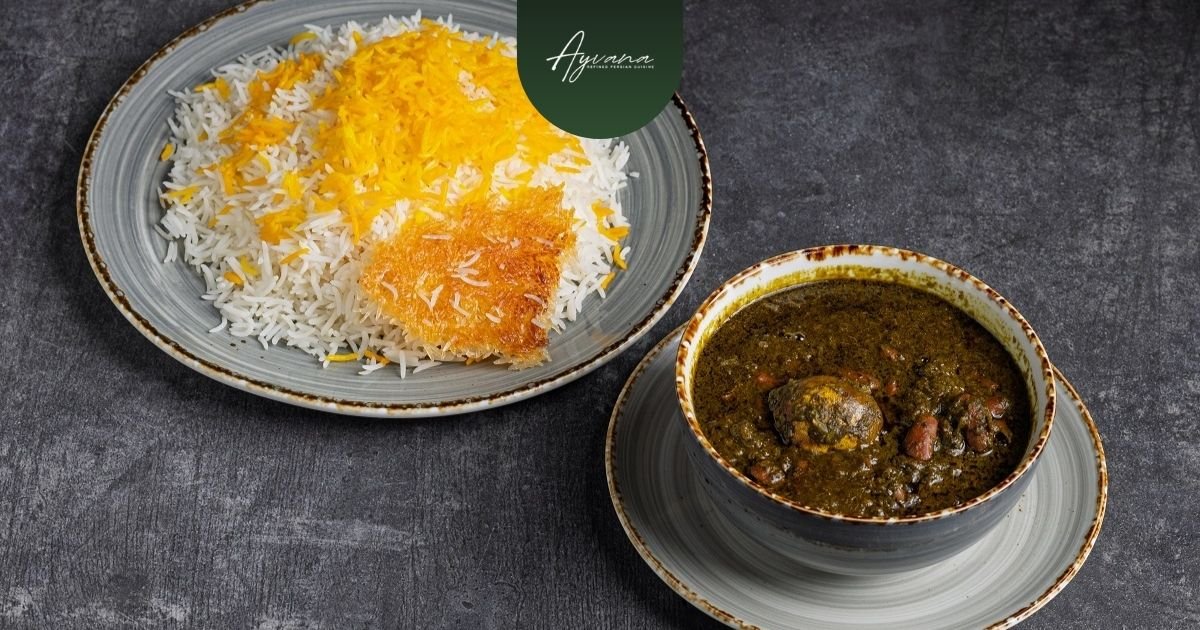
Ghormeh Sabzi (Herb Stew)
Ghormeh Sabzi is widely considered the most famous Persian stew. It is made with fresh herbs such as parsley, cilantro, and fenugreek combined with beans, dried lime, and slow-cooked meat.
The flavor is deeply herbal, earthy, and slightly sour from the dried lime. Although rich in flavor, it does not feel heavy. Many first-time diners describe it as surprisingly fresh compared to other slow-cooked stews.
Ghormeh Sabzi is often viewed as one of the defining dishes of Iranian cuisine and is commonly served during family gatherings and traditional meals.
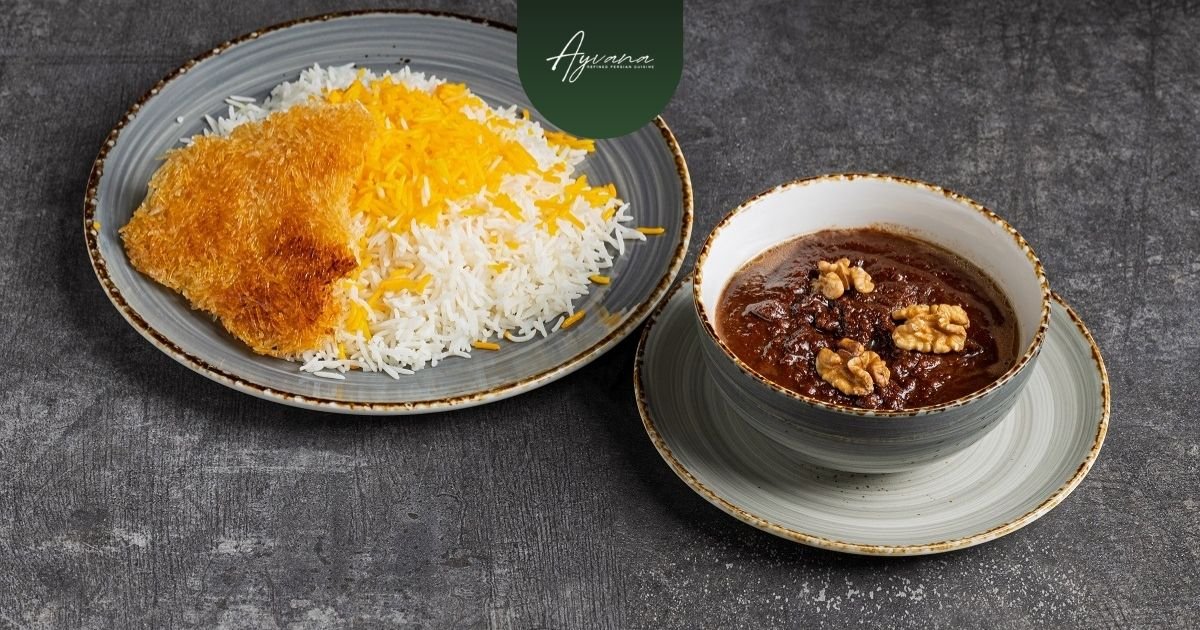
Khoresh Fesenjan (Pomegranate & Walnut Stew)
Fesenjan is one of the most distinctive Persian stews because it combines ground walnuts with pomegranate molasses to create a rich sweet-and-sour flavor.
The sauce becomes thick, nutty, and deeply aromatic as it cooks slowly over time. Depending on the region or family recipe, the stew may lean sweeter or more sour.
It is often served during celebrations and formal gatherings because of its luxurious texture and presentation. For diners unfamiliar with Persian cuisine, Fesenjan usually feels unlike anything found in most Western menus.
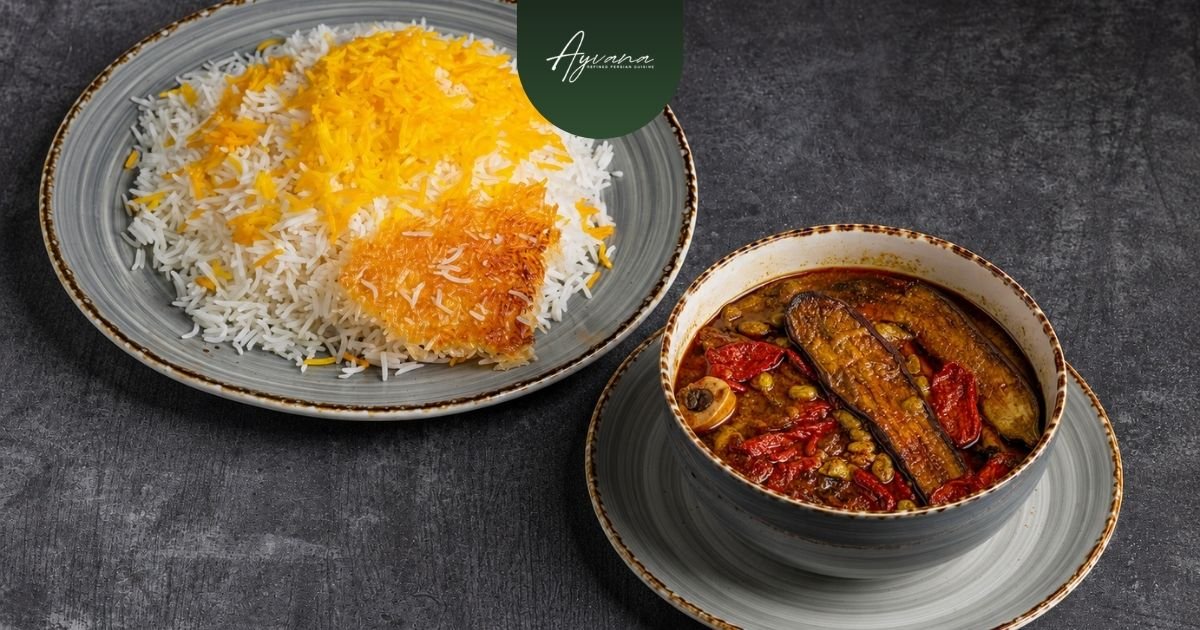
Khoresh Bademjan (Eggplant Stew)
Khoresh Bademjan is built around slow-cooked eggplant, tomatoes, and meat, usually with a slightly tangy tomato-based sauce.
The eggplant becomes soft and velvety while absorbing the flavor of the sauce. Compared to herb-heavy stews, this dish feels more savory and approachable for many first-time diners.
Because the flavors are familiar and balanced, Khoresh Bademjan is often considered one of the easiest Persian stews for beginners to try.
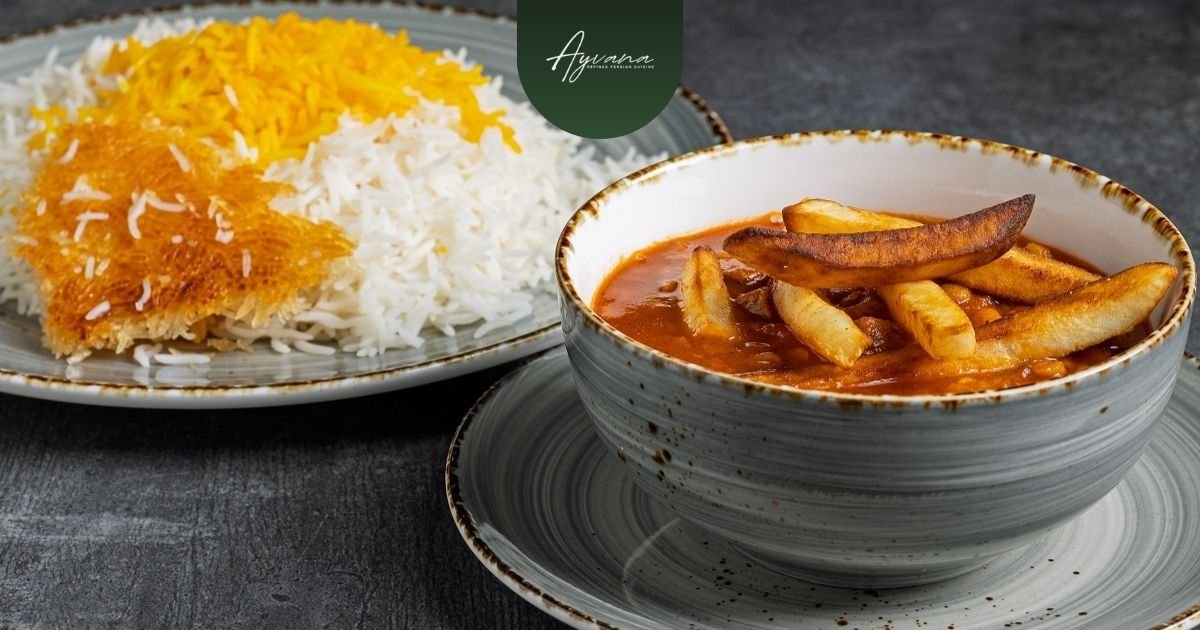
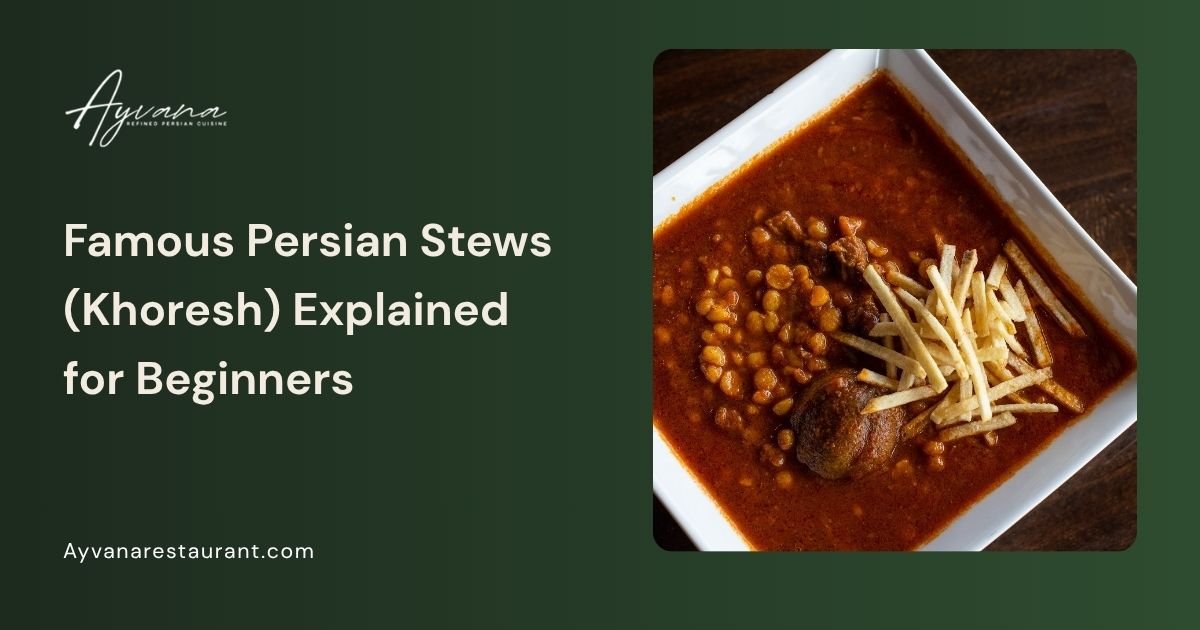
Khoresh Gheymeh (Split Pea Stew)
Khoresh Gheymeh combines yellow split peas, tomatoes, dried lime, and tender meat into a stew that feels comforting and balanced.
The split peas add texture without making the dish overly thick, while dried lime introduces a subtle sourness that keeps the flavor from becoming too heavy.
In many Iranian households, Khoresh Gheymeh is considered classic comfort food and is commonly served with fries placed directly over the rice or stew.
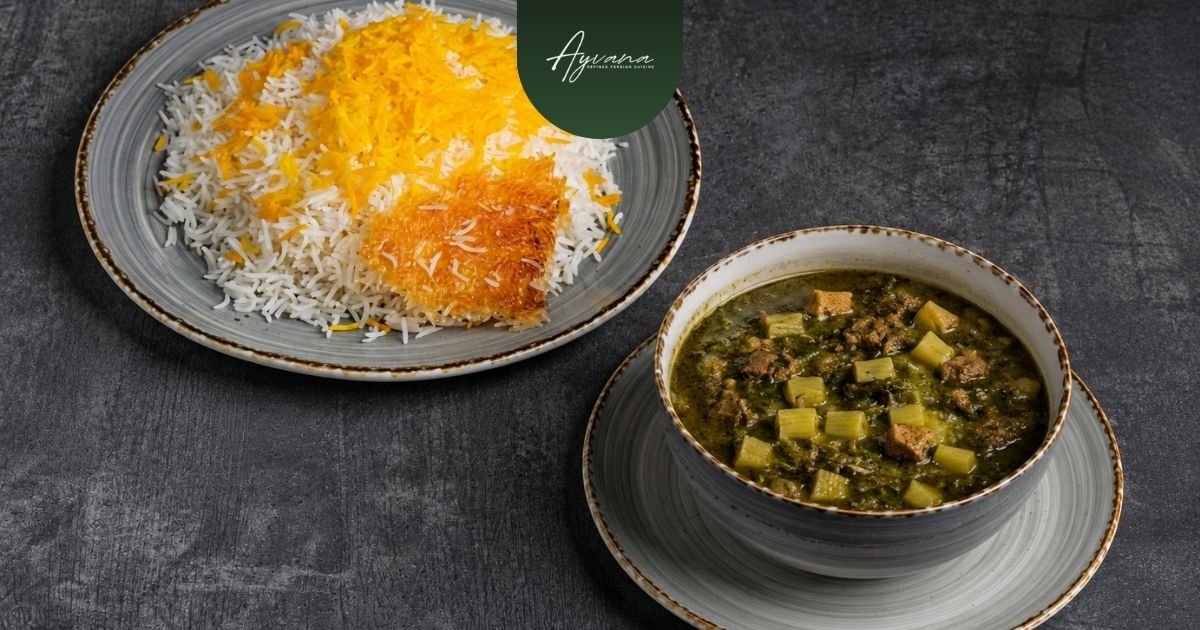
Khoresh Karafs (Celery Stew)
Khoresh Karafs is a celery-based Persian stew often prepared with herbs, meat, and lemon juice.
The flavor is lighter and fresher than many other Persian stews, with the celery contributing both aroma and texture. The herb combination keeps the dish balanced and slightly earthy.
People who enjoy greener, fresher flavors often prefer Khoresh Karafs over richer nut- or tomato-based stews.
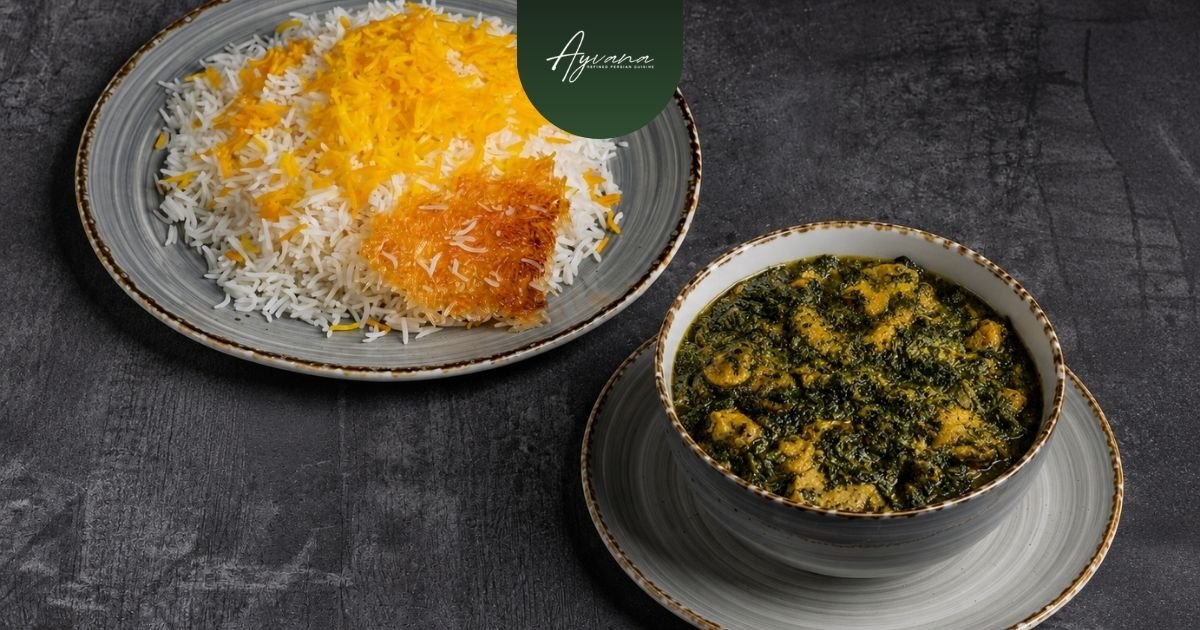
Khoresh Alu Esfenaj (Spinach & Prune Stew)
This stew combines spinach, prunes, and meat to create a balance of savory and mild sweetness.
The prunes soften during cooking and blend into the sauce, giving the dish a subtle fruity depth rather than a dessert-like sweetness. Spinach provides earthiness and balance.
Khoresh Alu Esfenaj is especially popular among diners who enjoy sweet-and-savory combinations but want something lighter than Fesenjan.
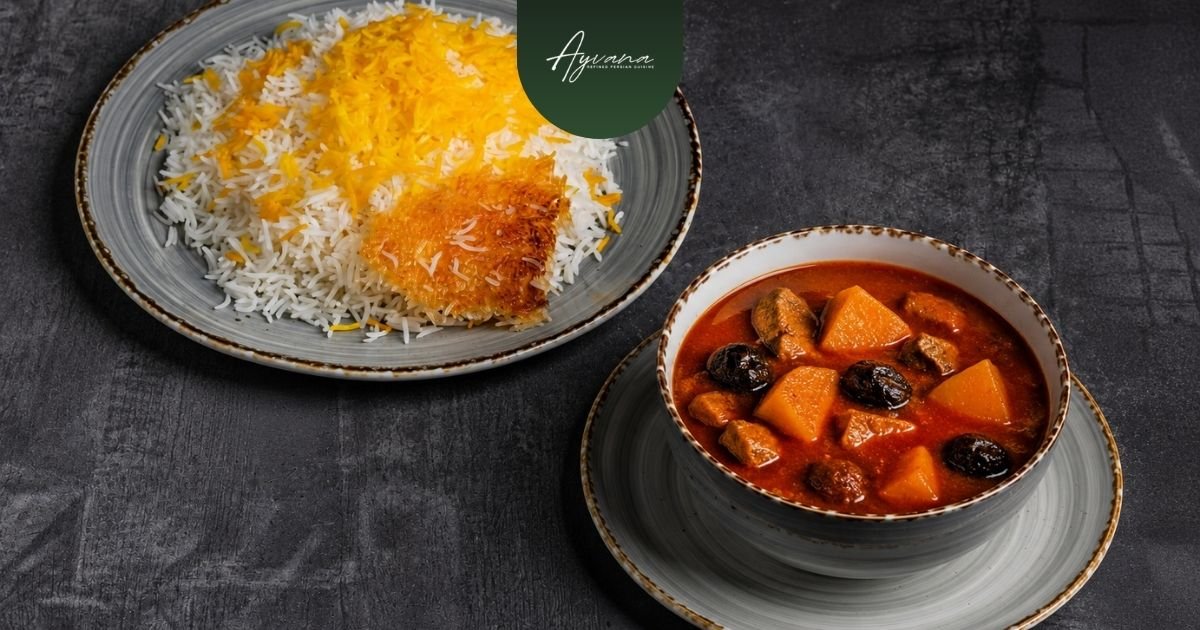
Khoresh Beh (Quince Stew)
Khoresh Beh uses quince fruit, meat, and warm spices to create one of the more aromatic Persian stews.
The quince softens during cooking while maintaining a delicate fruit flavor that sits between apple and pear. The result is fragrant, slightly sweet, and comforting.
This stew is often associated with colder seasons and traditional home-style Persian cooking.
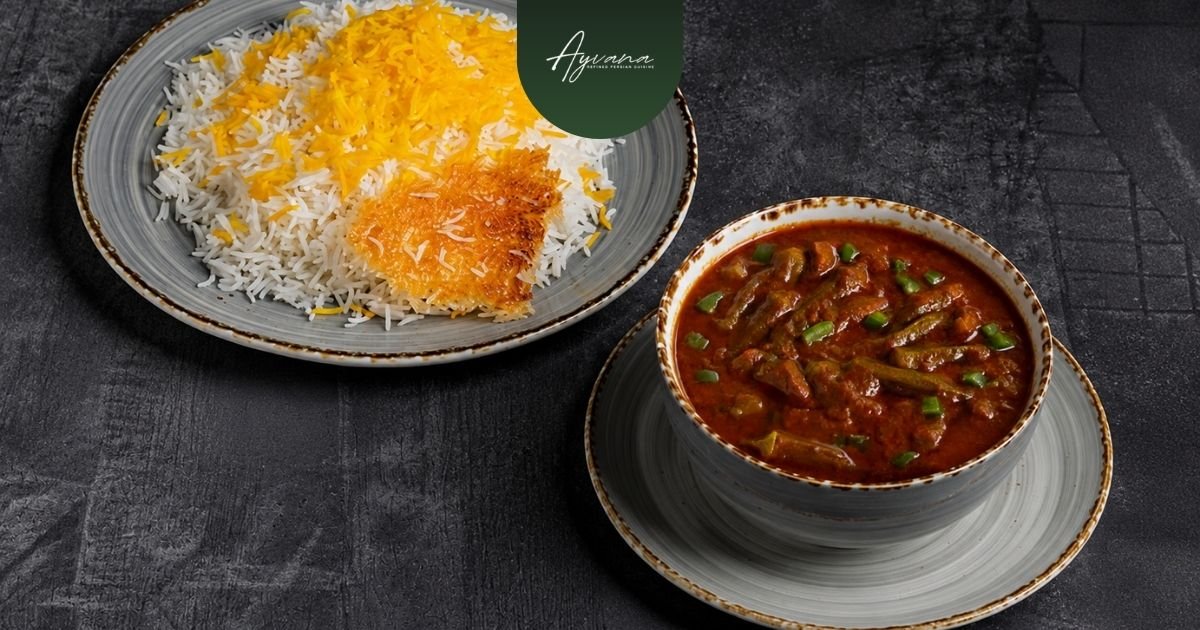
Khoresh Bamieh (Okra Stew)
Khoresh Bamieh is an okra-based stew typically prepared with tomatoes, spices, and meat.
The flavor profile is savory and lightly tangy, while the okra becomes soft without losing all of its texture. Compared to some richer Persian stews, Khoresh Bamieh feels lighter and more vegetable-focused.
It is especially popular in southern parts of Iran where okra dishes are more common.
Persian Stew Vegetarian Options
Many Persian stews can be adapted into vegetarian dishes without losing the layered flavor structure that defines Persian cooking. Herbs, legumes, eggplant, mushrooms, lentils, and walnuts often provide enough depth to replace meat naturally.
Vegetarian Persian stews are especially appealing because the cuisine already relies heavily on vegetables, herbs, and slow-cooked aromatics rather than spice heat alone.
Popular Vegetarian Persian Stews
Vegetarian Ghormeh Sabzi often replaces meat with beans or mushrooms while preserving the stew’s signature herbal and sour flavor. The result still feels rich and balanced because the herbs remain the dominant element.
Vegetarian Khoresh Bademjan works particularly well because eggplant already plays a central role in the dish. Without meat, the stew becomes lighter while still maintaining its savory tomato-based flavor.
Other plant-based Persian stews may use lentils, chickpeas, walnuts, spinach, or seasonal vegetables to create depth and texture through slow cooking rather than animal protein.
Traditional Persian Stews List by Flavor Type
Persian stews are often easier to understand when grouped by flavor profile, especially for diners trying to choose Persian dishes based on taste preferences.
- Sour & Tangy Persian Stews: Stews such as Ghormeh Sabzi and Khoresh Gheymeh use dried lime to create a noticeable sourness that balances the richness of the dish.
- Sweet & Savory Persian Stews: Fesenjan and Khoresh Alu Esfenaj combine fruit-based sweetness with savory ingredients, creating the sweet-and-sour contrast common in Persian cuisine.
- Herbal & Earthy Persian Stews: Ghormeh Sabzi and Khoresh Karafs rely heavily on herbs and greens, giving them fresher and more aromatic flavor profiles.
- Nut-Based Persian Stews: Fesenjan is the best-known example of a Persian stew where nuts become central to the sauce itself rather than acting as a garnish.
How to Choose the Right Persian Stew for You
If you enjoy sour or tangy foods, Ghormeh Sabzi and Gheymeh are often strong starting points because dried lime creates brightness without overwhelming the dish.
If you prefer richer and slightly sweet flavors, Fesenjan or Alu Esfenaj may feel more appealing because of their fruit and nut combinations.
For diners who enjoy herb-forward meals, Khoresh Karafs and Ghormeh Sabzi provide fresher and greener flavor profiles.
Vegetarian diners often gravitate toward Bademjan-based dishes or plant-based versions of traditional herb stews because the flavors remain layered even without meat.
How Persian Stews Are Traditionally Served
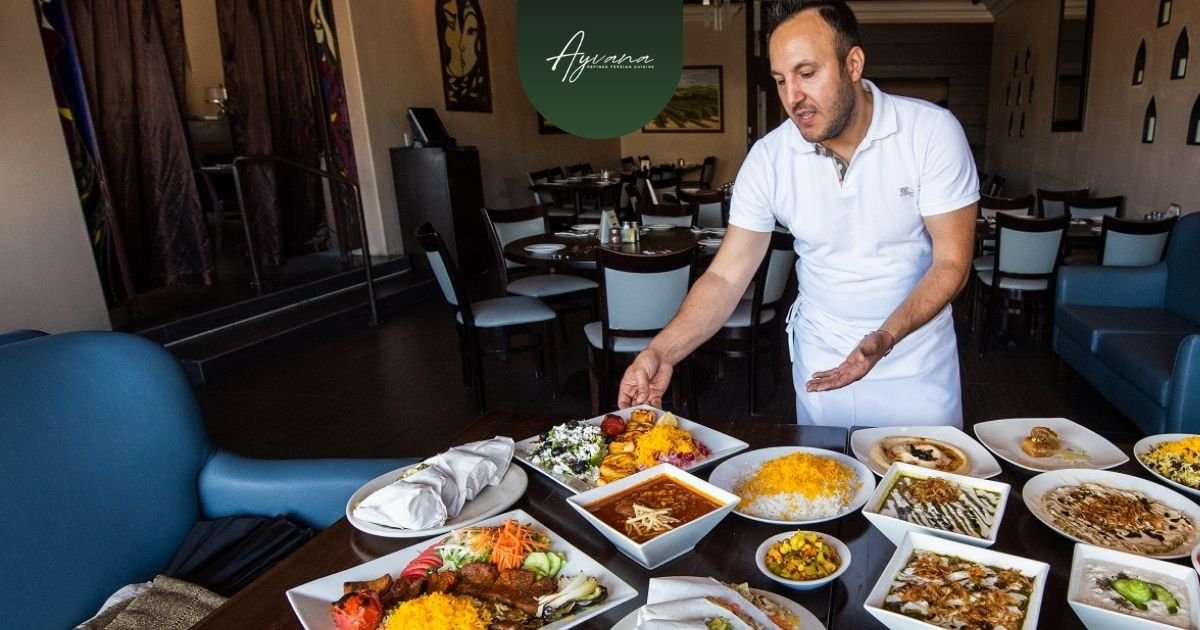
Persian stews are almost always served with rice rather than bread alone. The rice, usually Chelow, acts as the foundation of the meal and balances the intensity of the stew.
Many meals also include tahdig, the crispy rice layer prized in Persian cooking for its texture and richness. Yogurt sides, fresh herbs, and pickled vegetables (torshi) are commonly served alongside the stew to add freshness and contrast.
In Iranian homes, stews are usually placed in the center of the table and shared among the group. Restaurants often present them in a more individually portioned style while still maintaining the traditional pairing with rice and sides.
Because Persian stews are often served as part of a larger shared meal, some diners also enjoy exploring wine pairing with Persian food alongside richer dishes such as Fesenjan or Gheymeh.

Where to Try Authentic Persian Stews in Tarzana
Authentic Persian stews require time, balance, and careful preparation. The layering of herbs, dried lime, saffron, fruit, and slow-cooked ingredients is difficult to replicate without traditional cooking techniques.
At Ayvana Persian Restaurant in Tarzana, guests can explore a range of traditional Persian dishes prepared with attention to authentic flavor and presentation. For first-time visitors, trying Persian stews in a restaurant setting can make it easier to experience how these dishes fit into a full Persian dining experience alongside rice, sides, and shared dishes.
For both first-time visitors and longtime fans of Iranian cuisine, traditional stews remain some of the most famous Persian dishes and culturally important parts of the menu.