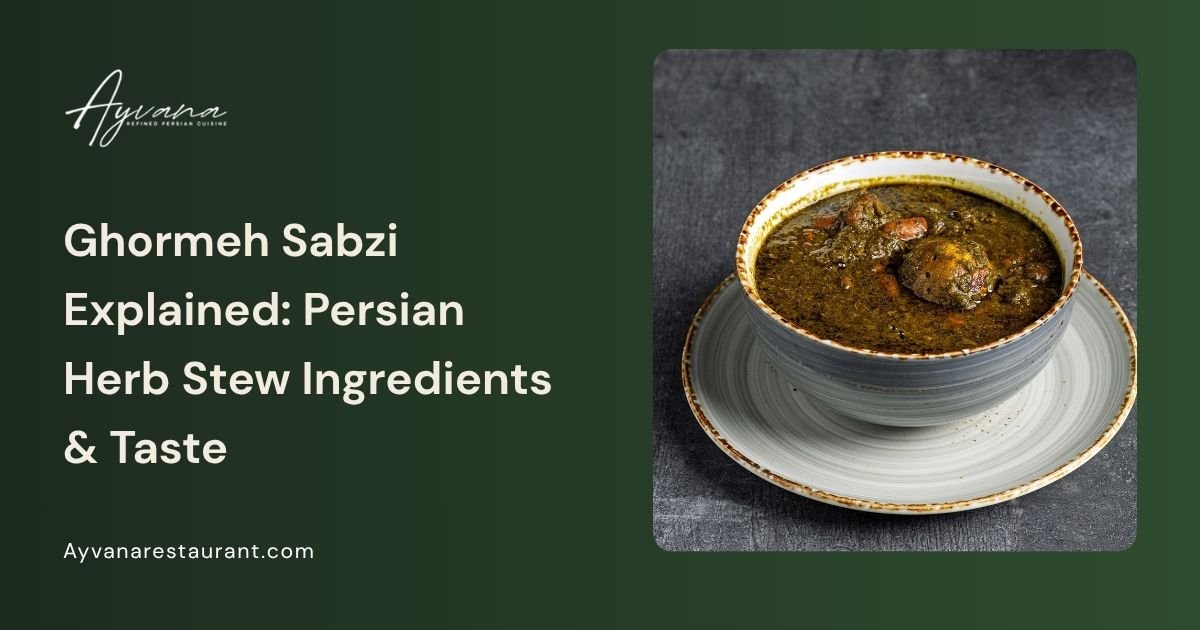
Ghormeh sabzi is one of the most well-known dishes in Persian cuisine, recognized for its deep flavor, rich aroma, and distinctive use of herbs. For many, it represents the essence of Iranian home cooking.
This guide explains what ghormeh sabzi is, what ingredients define it, how it tastes, and how it fits into a Persian meal.
Here is the Quick Answer:
Ghormeh sabzi is a traditional Persian herb stew made with a blend of parsley, cilantro, and fenugreek, combined with beans, meat, and dried lime. It has a deep, earthy flavor with a subtle sour note and is typically served with Persian-style rice, often alongside tahdig for added texture.
What is ghormeh sabzi (Persian herb stew)?
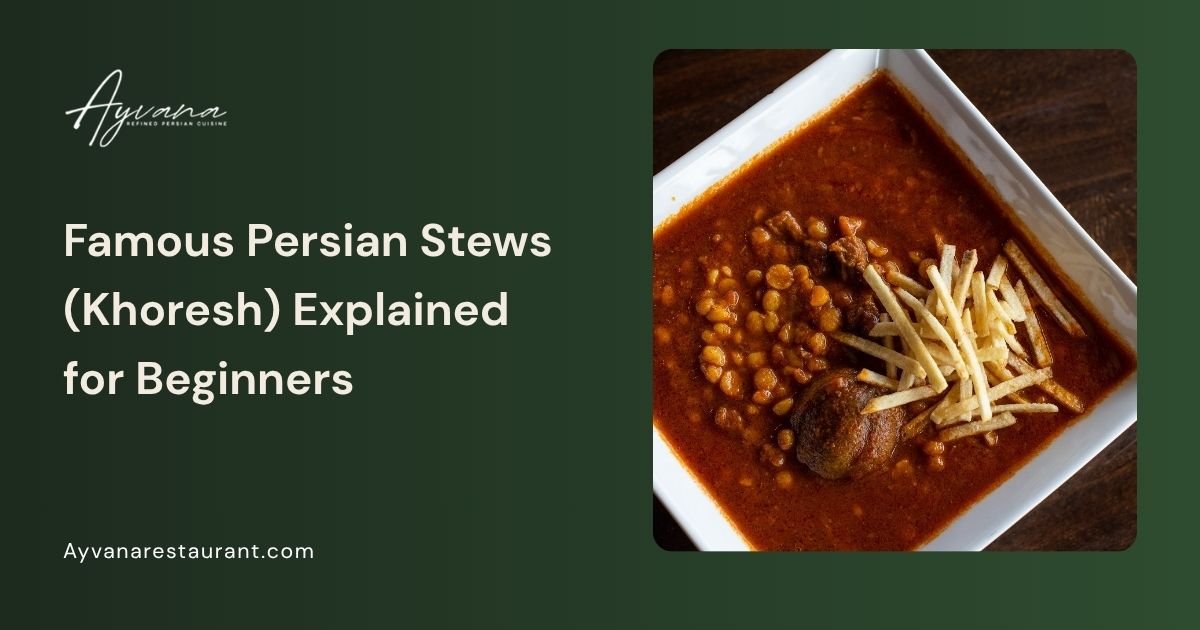
Ghormeh sabzi is a slow-cooked Persian herb stew made with a blend of fresh herbs, beans, meat, and dried lime. It is typically served with rice and is considered a staple dish in Iranian cuisine.
The stew is built around a mixture of herbs that are sautéed and then simmered for an extended period, allowing the flavors to deepen and combine. Dried lime adds a distinct sour note, while beans and meat contribute body and richness.
Although it appears simple at first, the dish depends on careful preparation and time to reach its full flavor.

Why is ghormeh sabzi so important in Persian cuisine?
Ghormeh sabzi is often described as a defining dish of Persian cooking. It appears regularly in homes and is widely available in restaurants, making it one of the most familiar flavors for those who grew up with Iranian food.
Its importance comes from how it reflects key elements of Persian cuisine. Herbs are not used as garnish but as the foundation of the dish. Slow cooking is essential, allowing the ingredients to develop depth over time. The balance between richness and sourness is central to the overall experience.
Because of these qualities, ghormeh sabzi is frequently associated with comfort, tradition, and everyday meals shared with family.
Ghormeh Sabzi Ingredients: What is in ghormeh sabzi?
The identity of ghormeh sabzi comes from how its ingredients work together rather than from any single component.
Which herbs are used in ghormeh sabzi?
The herb mixture is the most important part of the dish. It typically includes parsley, cilantro, and chives or green onion, with fenugreek added in smaller amounts.
These herbs are finely chopped and sautéed before being added to the stew. This step changes their flavor, creating a deeper, more complex taste compared to raw herbs.
The proportion of herbs affects the final result, but the combination itself is what gives ghormeh sabzi its dark color, earthy aroma, and recognizable character.
Dried Lime in Ghormeh Sabzi
Dried lime, often referred to as limoo amani, is a key ingredient that sets ghormeh sabzi apart.
It adds a layered sourness that is slightly citrusy, slightly earthy, and distinct from fresh lemon. As it cooks in the stew, it infuses the broth with a subtle tang that balances the richness of the herbs and meat.
Meat Used in Ghormeh Sabzi
Beef or lamb is commonly used, cut into small pieces and cooked until tender.
The meat adds depth and body to the stew, but it does not dominate the flavor. Instead, it supports the herb base and helps create a more complete, satisfying dish.
Beans in Ghormeh Sabzi
Kidney beans are most commonly used, though other varieties may appear depending on preference.
They add texture and make the stew more substantial. Their mild flavor allows the herbs and dried lime to remain the focus.
Onion, Oil, and Seasoning
The base of the stew begins with onion sautéed in oil, which provides a foundation for the rest of the ingredients.
Seasoning is typically simple, often limited to salt and pepper. The emphasis remains on the natural flavors of the herbs and the tang of the dried lime rather than strong spice blends.
Learn More: Common Ingredients in Persian Cuisine
What does ghormeh sabzi (Persian herb stew) taste like?
Ghormeh sabzi has a layered flavor that combines herbaceous, earthy, and tangy notes.
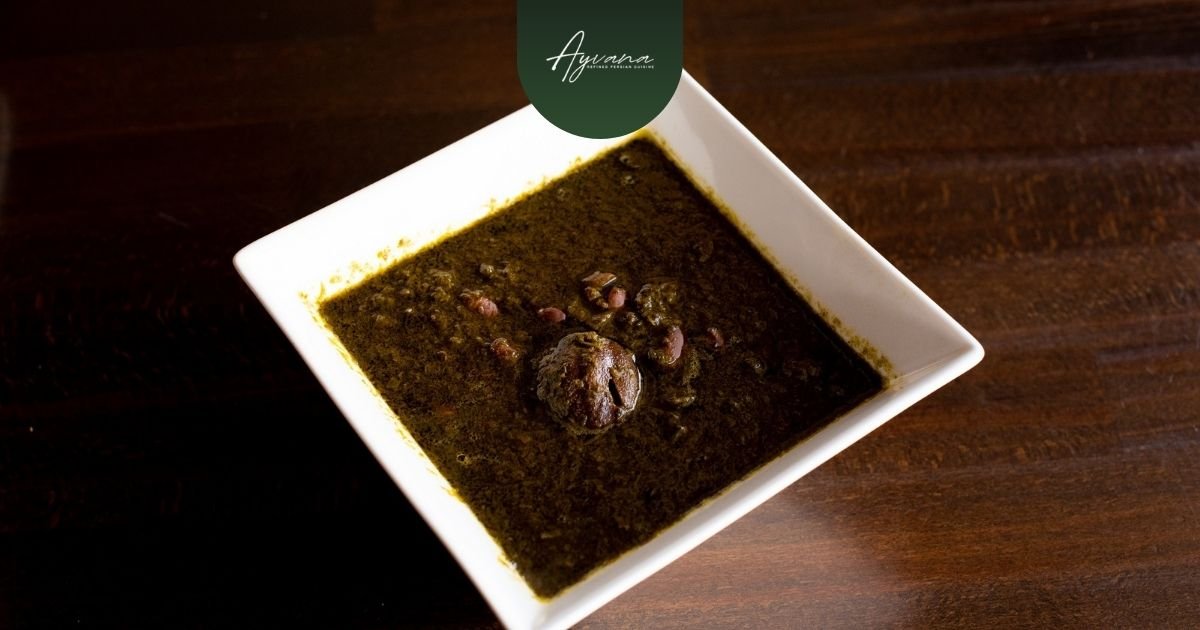
The herbs create a deep, savory base with a slightly green, almost toasted character from the sautéing process. The dried lime introduces a gentle sourness that runs through the dish without overpowering it.
The texture is rich and cohesive, with tender meat and soft beans blending into the herb-based stew. The result is a dish that feels both comforting and complex at the same time.
Is ghormeh sabzi healthy?
Ghormeh sabzi is often perceived as a balanced dish because of its combination of herbs, beans, and protein.
The large amount of herbs contributes freshness and depth without relying on heavy sauces. Beans add substance, while the meat provides richness.
When served with rice, the meal becomes more filling. Pairing it with lighter sides such as salad or yogurt can help create a more balanced plate.
What is ghormeh sabzi served with?
Ghormeh sabzi is almost always served as part of a complete meal rather than on its own.
- Ghormeh Sabzi With Persian Rice: It is typically paired with Persian-style rice, which provides a neutral base that absorbs the flavors of the stew. In many cases, the rice is served with tahdig, the crispy golden layer at the bottom of the pot, adding a contrasting texture to the soft, herb-rich stew.
- Side Dishes That Pair With Ghormeh Sabzi: Fresh herbs, yogurt-based sides, or simple salads such as Shirazi salad may be served alongside it, adding contrast and variety.
- How Ghormeh Sabzi Is Served in Restaurants: In a restaurant setting, the stew is usually presented separately from the rice, allowing diners to combine them as they eat.
How is ghormeh sabzi different from other Persian stews?
Ghormeh sabzi stands out because it is built around herbs rather than tomatoes, fruit, or sweeter elements.
Many other Persian stews rely on ingredients such as pomegranate, barberries, or tomato-based sauces. In contrast, ghormeh sabzi focuses on green herbs and dried lime, giving it a darker color and a more earthy, tangy flavor profile.
This herb-forward identity makes it one of the most distinctive dishes in Persian cuisine.
Is ghormeh sabzi an everyday dish or a special occasion dish?
Ghormeh sabzi is commonly prepared at home and is considered an everyday dish, but it is also served on special occasions.
Because it requires time and attention, it often appears in meals where care and tradition are emphasized. Its presence in both daily cooking and gatherings reflects its importance in Persian food culture.
Where to Try Ghormeh Sabzi in Tarzana
Reading about ghormeh sabzi provides a clear understanding of its ingredients and structure, but tasting it as part of a full meal offers a better sense of how it fits into Persian cuisine.
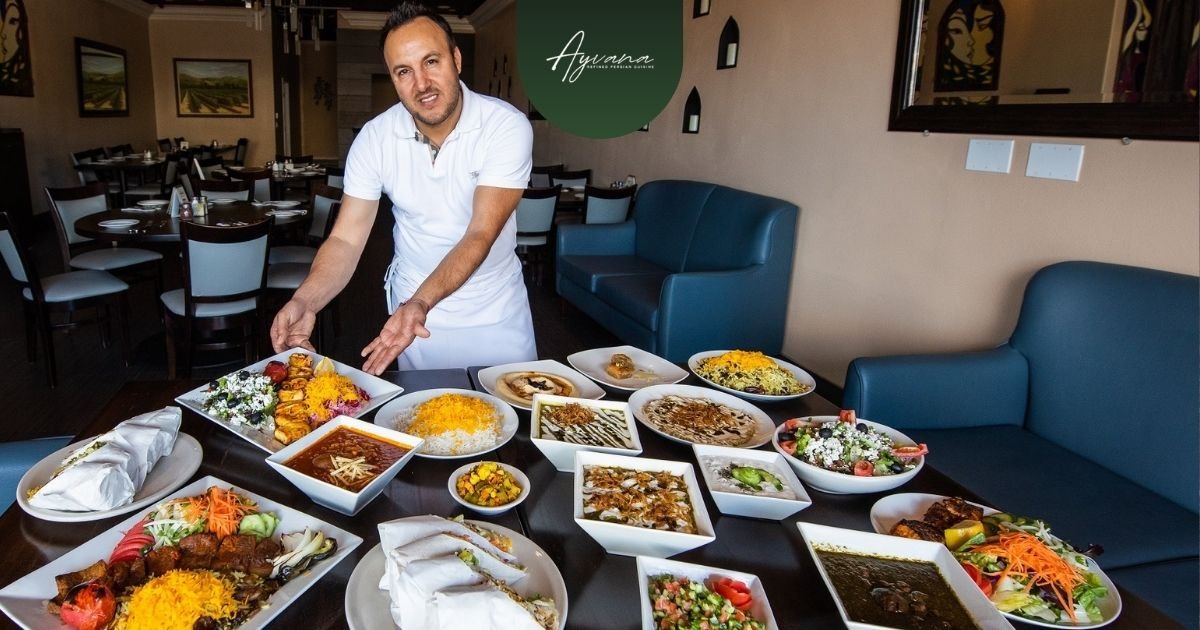
At Ayvana Persian restaurant in Tarzana, ghormeh sabzi is served alongside rice and traditional sides, allowing diners to experience the balance between herbs, sourness, and richness in context.
Try Authentic Ghormeh Sabzi (Persian Herb Stew) at Ayvana Persian Restaurant
Ghormeh sabzi is one of the best dishes for understanding how Persian cuisine uses herbs, slow cooking, and balance.
At Ayvana, it can be experienced as part of a complete meal, where the stew, rice, and sides come together in a way that reflects traditional Persian dining.