
Shirazi salad is one of the simplest and most recognizable dishes in Persian cuisine. Made with finely chopped vegetables and a light citrus dressing, it reflects the broader Persian approach to food: fresh, balanced, and precise.
In this guide, you’ll find a clear explanation of what Shirazi salad is, what goes into it, how it tastes, and how it is served. If you’re new to Persian food, this will help you understand where it fits in a meal and what to expect when you see it on a menu.
Here is the Quick Answer:
Shirazi salad is a finely chopped Persian salad made with cucumber, tomato, onion, and lemon juice. It tastes fresh, crisp, and tangy, and is typically served as a side with kebabs, rice dishes, or stews to add balance and contrast to the meal.
What is Shirazi salad?
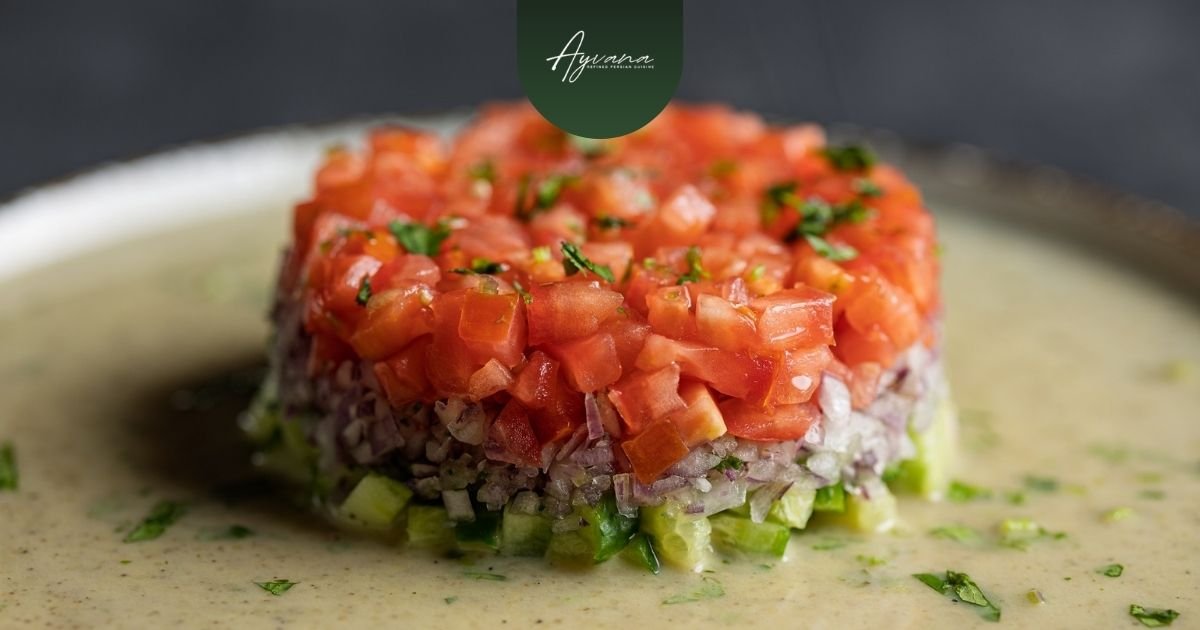
Shirazi salad is a traditional Persian chopped salad made from cucumber, tomato, and onion, dressed with lemon juice and sometimes a small amount of olive oil. It is typically served as a side dish alongside main courses rather than eaten on its own.
What makes Shirazi salad distinctive is its fine, uniform chop and its emphasis on freshness. The ingredients are cut small enough that each bite includes a mix of crisp, juicy, and tangy elements. It is not heavily seasoned or dressed. Instead, it relies on the natural flavor of the vegetables and the brightness of the citrus.
Why is Shirazi salad important in Persian cuisine?
Shirazi salad plays a specific role within a Persian meal. It provides contrast to richer dishes such as rice, stews, and grilled meats.
Persian cuisine often balances heavier elements with something fresh and acidic. Shirazi salad fills that role. Its crisp texture and tangy flavor help reset the palate between bites, making the overall meal feel lighter and more balanced.
Because of this function, it is a common presence at both everyday meals and restaurant tables.
What ingredients are in Shirazi salad?
The ingredients in Shirazi salad are simple, but each one contributes to the final texture and flavor.
- Cucumber: Cucumber forms the base of the salad. It adds a clean, crisp texture and a cooling quality that makes the dish feel light and refreshing.
- Tomato: Tomatoes bring juiciness and a mild sweetness. Their softness contrasts with the crunch of the cucumber.
- Onion: Onion adds sharpness and depth. When finely chopped, it blends into the salad rather than overpowering it.
- Lemon Juice: Lemon juice provides the main source of acidity. It ties the ingredients together and gives the salad its bright, tangy character.
- Seasoning: Salt is typically used to enhance the natural flavors. Some variations may include a small amount of olive oil, but the dressing remains light.
The balance between these ingredients is what defines Shirazi salad. No single element should dominate.
Learn More: Common Ingredients in Persian Cuisine
What does Shirazi salad taste like?
Shirazi salad tastes fresh, crisp, and lightly tangy. The cucumber and tomato create a juicy base, while the onion adds a subtle bite. The lemon juice brings everything together with a clean acidity.
The overall effect is light and refreshing rather than rich or heavy. It is designed to complement other dishes, not compete with them.
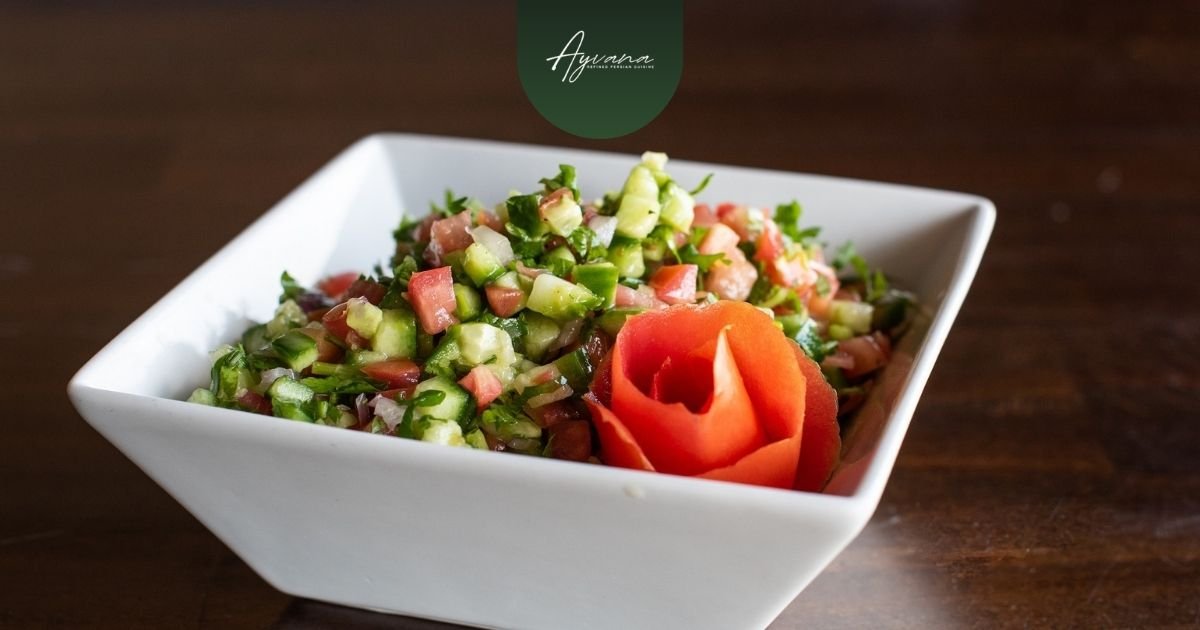
Why is Shirazi salad chopped so finely?
One of the defining characteristics of Shirazi salad is how finely it is chopped.
This fine cut ensures that every bite contains a balanced mix of all ingredients. It also allows the lemon juice to coat the vegetables evenly, creating a more consistent flavor.
Compared to larger-cut salads, Shirazi salad feels more integrated and uniform. The texture is less about individual pieces and more about how they come together.
Where does Shirazi salad come from?
Shirazi salad is named after the city of Shiraz in southern Iran. While its origins are associated with that region, the dish is now common across Persian cuisine.
Today, it is considered a standard part of the Persian table, both in homes and restaurants.
Is Shirazi salad the same as Persian salad?
Shirazi salad is a type of Persian salad, but it is not the only one.
The term “Persian salad” can refer to a range of dishes, including herb platters, yogurt-based sides, and other vegetable combinations. Shirazi salad is one of the most recognizable because of its simplicity and widespread use.
What do you eat Shirazi salad with?
Shirazi salad is typically served alongside main dishes rather than on its own.
- Shirazi Salad With Kebabs: It pairs well with grilled meats, where its acidity helps balance the richness.
- Shirazi Salad With Rice Dishes: With rice-based dishes, it adds freshness and contrast to the heavier base.
- Shirazi Salad as a Fresh Side: In most Persian meals, it is shared at the table and eaten alongside other dishes.
Is Shirazi salad healthy?
Shirazi salad is often considered a light and refreshing option.
It is made primarily from fresh vegetables and a simple dressing, without heavy sauces or added fats. Its high water content and clean flavor make it feel hydrating and easy to eat alongside richer foods.
Is Shirazi salad an appetizer, side dish, or main salad?
Shirazi salad is best understood as a side dish.
In Persian dining, it is usually served as part of a larger meal, alongside rice, stews, or kebabs. It is not typically eaten as a standalone main dish.
Shirazi Salad vs Greek Salad, Israeli Salad, and Other Chopped Salads
Shirazi salad shares similarities with other chopped vegetable salads, but it has distinct differences.
Compared to Greek salad, it is lighter and does not include cheese or heavier ingredients. Compared to Israeli salad, it is more focused on balance and fine texture, with a simpler dressing.
What sets Shirazi salad apart is its precision in chopping and its role as a supporting dish within a larger meal.
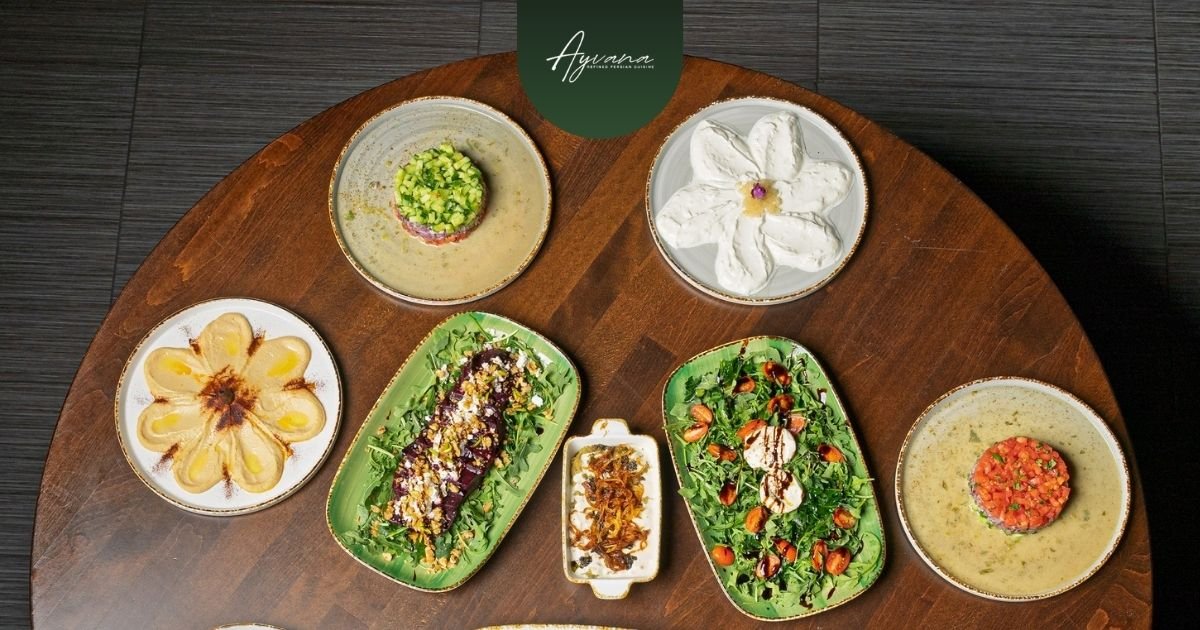
How Shirazi Salad Fits Into a Persian Restaurant Experience
In a Persian restaurant, dishes are designed to work together. Shirazi salad is part of that balance.
When served alongside rice, kebabs, or stews, it provides contrast in texture and flavor. It introduces freshness and acidity, which helps highlight the other elements of the meal.
For someone new to Persian cuisine, trying Shirazi salad is one of the easiest ways to understand how balance is built into the dining experience.
Try Shirazi Salad at Ayvana Persian Restaurant
Reading about Shirazi salad gives a clear idea of what it is, but tasting it alongside a full Persian meal provides a better understanding.
At Ayvana Persian restaurant in Tarzana, Shirazi salad is served as part of a broader menu that reflects traditional flavors and balance. Paired with kebabs, rice dishes, or stews, it shows how a simple dish can play an essential role in the overall experience.