Persian cuisine is known for its balance, fragrance, freshness, and layered flavor. Rather than relying on intense heat or heavy spices, it builds complexity through carefully selected ingredients that work together in harmony.
In this guide, you’ll learn about the most common ingredients in Persian cuisine, what they taste like, why they matter, and how they appear in everyday dishes. If you’re new to Persian food or trying to understand what ingredients define it, this article will give you a clear and practical foundation. And if you want to experience these ingredients firsthand, Ayvana Persian restaurant in Tarzana offers a local place to explore them in real dishes.
Here is the Quick Answer:
The most common ingredients in Persian cuisine include saffron, fresh herbs (like parsley, cilantro, and dill), rice, dried lime, yogurt, and a variety of fruits and nuts such as pomegranate, barberries, and walnuts. These ingredients are used to create balanced flavors that combine fragrance, gentle sourness, subtle sweetness, and richness, rather than heat or heavy spice.
What makes ingredients in Persian cuisine unique?
The ingredients in Persian cuisine are not used in isolation. They are combined to create balance across multiple dimensions of flavor.
Persian cooking often blends fresh herbs, subtle spices, slow-cooked richness, and gentle sourness. Instead of emphasizing heat, it focuses on fragrance and contrast. A single dish may include herbal freshness, tang from dried lime or pomegranate, and a mild sweetness from ingredients like raisins or caramelized onion.
This balance is one of the defining differences between Persian cuisine and many neighboring food traditions. Herbs are used as core ingredients rather than garnish, rice is treated as a central element rather than a side, and fruits are frequently incorporated into savory dishes. These choices give Persian food its recognizable identity.
The Most Common Ingredients in Persian Cuisine
To understand Persian food ingredients, it helps to group them by their role in cooking. Each category contributes something distinct, from aroma and color to texture and depth.
Essential Spices & Aromatics in Persian Cuisine
Spices in Persian cooking are used with restraint. Their purpose is to support the overall flavor rather than dominate it.
Saffron (Zafferan)
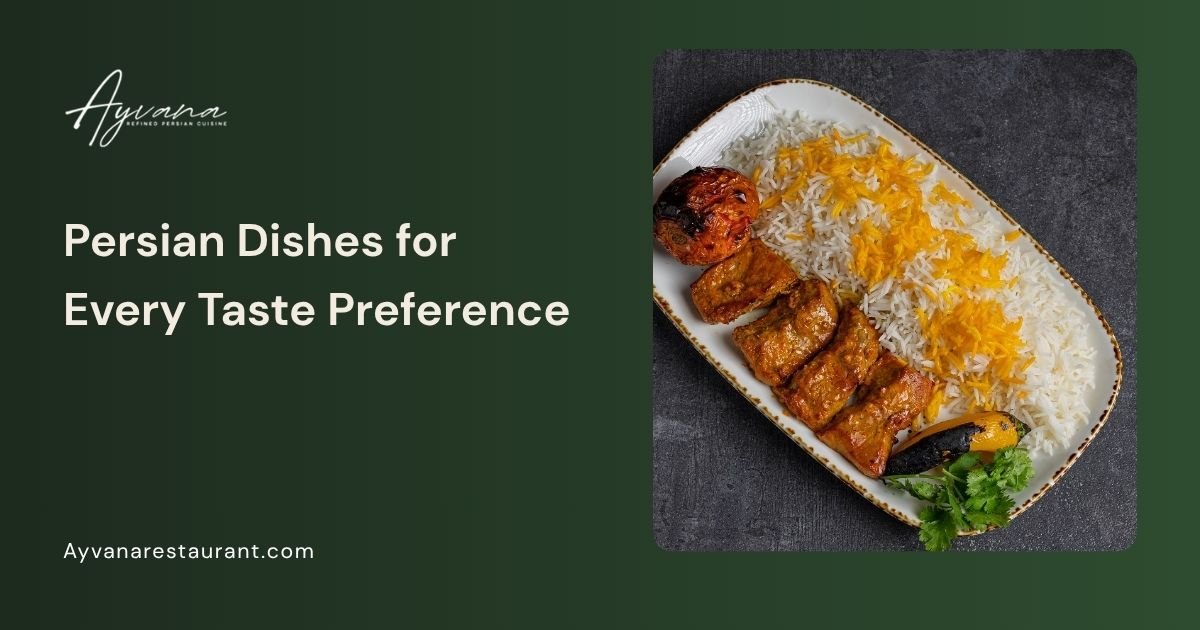
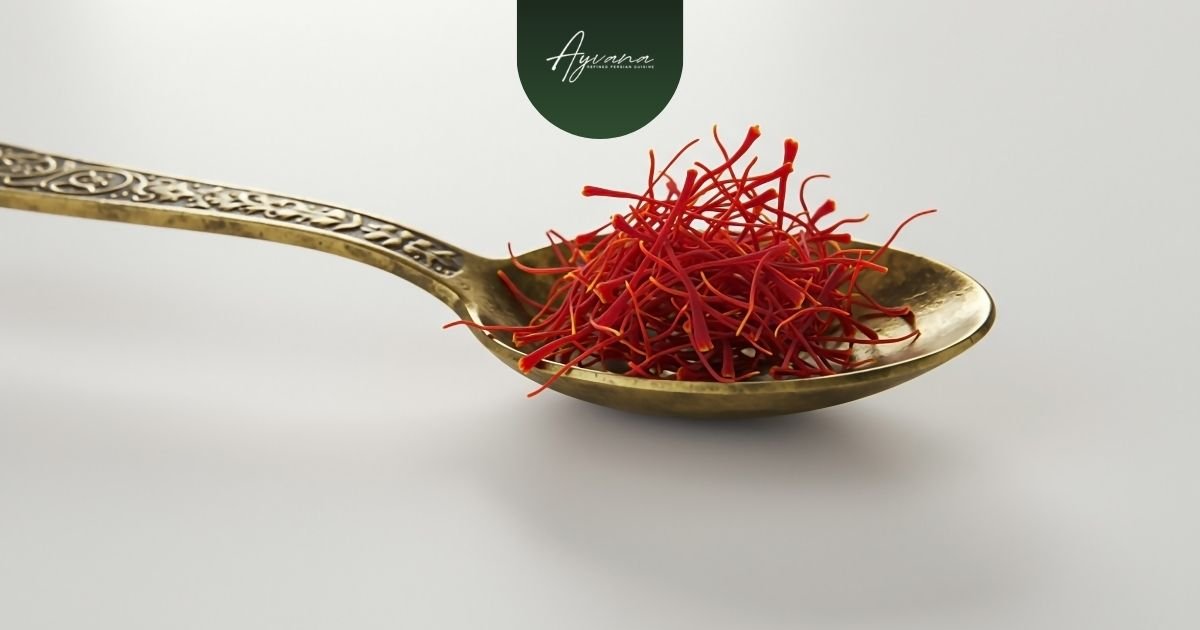
Saffron is one of the most important and recognizable ingredients in Persian cuisine. It brings a delicate floral aroma, a golden color, and a subtle earthy sweetness. Typically dissolved in warm water before use, it appears in dishes such as saffron rice, tahchin, and many chicken or lamb preparations. Its use is often associated with hospitality and special occasions.
Turmeric (Zard Chubeh)
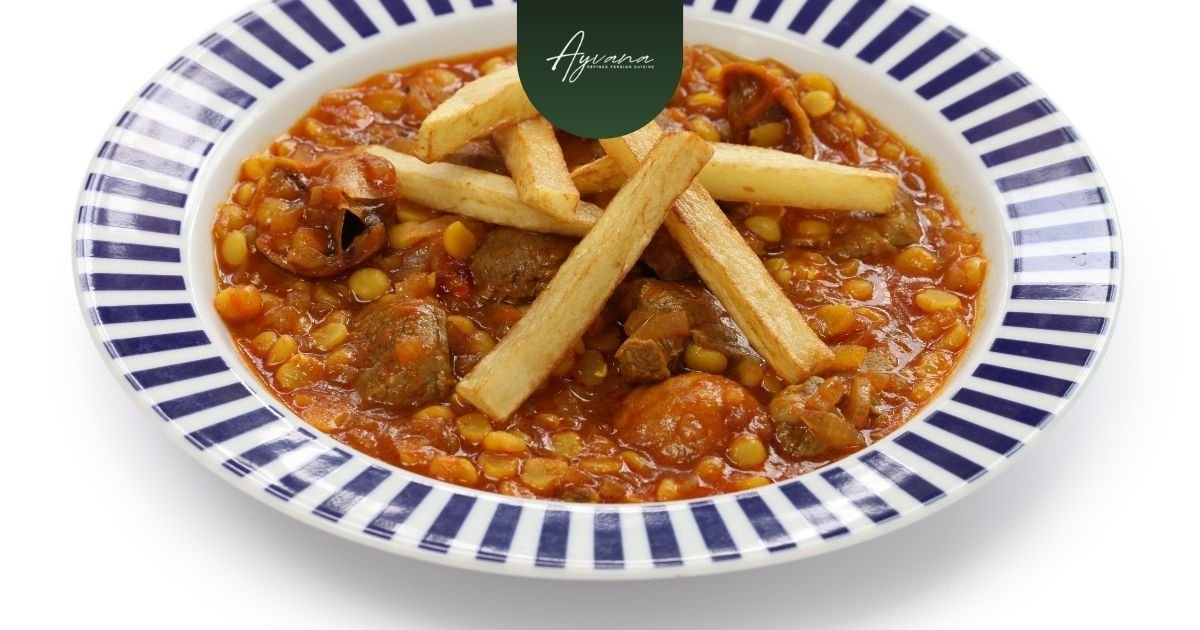
Turmeric serves as a foundational spice in everyday cooking. It adds warmth and color rather than strong flavor and is often used at the beginning of cooking to build a base. It is common in stews like gheimeh, as well as in many chicken and lentil dishes.
Cinnamon (Darchin)
In Persian cuisine, cinnamon is not limited to desserts. It adds warmth and depth to savory dishes, particularly in rice dishes like adas polo and certain meat-based stews. Its role is subtle, contributing complexity rather than sweetness.
Sumac (Somagh)
Sumac provides a tangy, slightly acidic flavor and is typically sprinkled over food just before serving. It is closely associated with kebabs and grilled meats, where it adds brightness without the need for citrus juice.
Dried Lime (Limoo Amani)
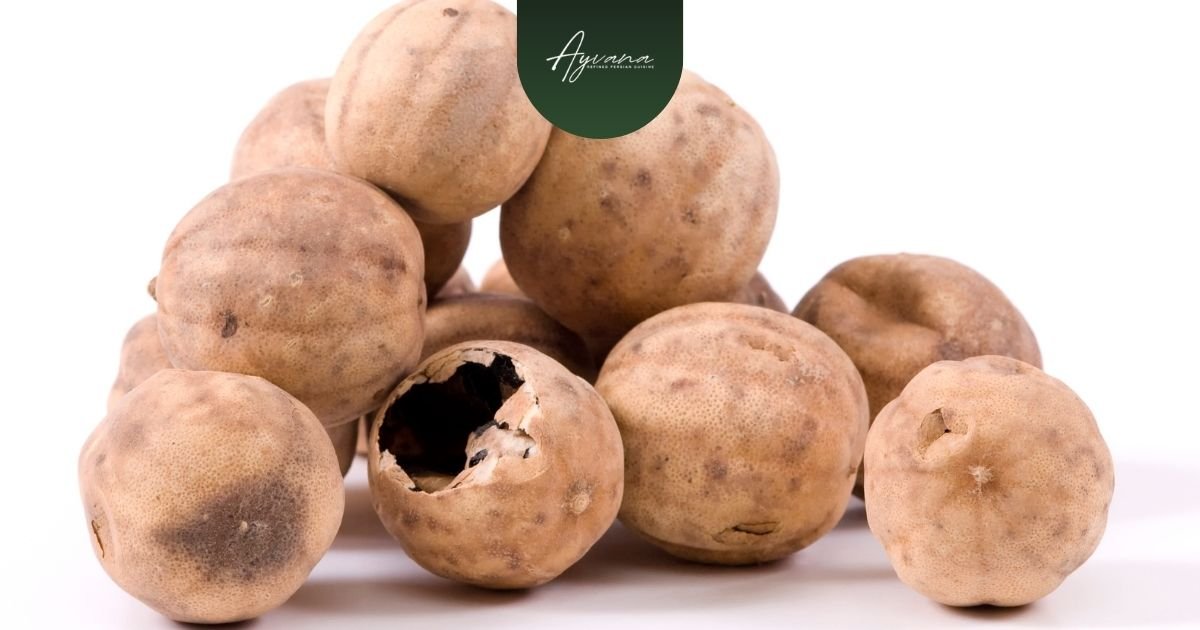
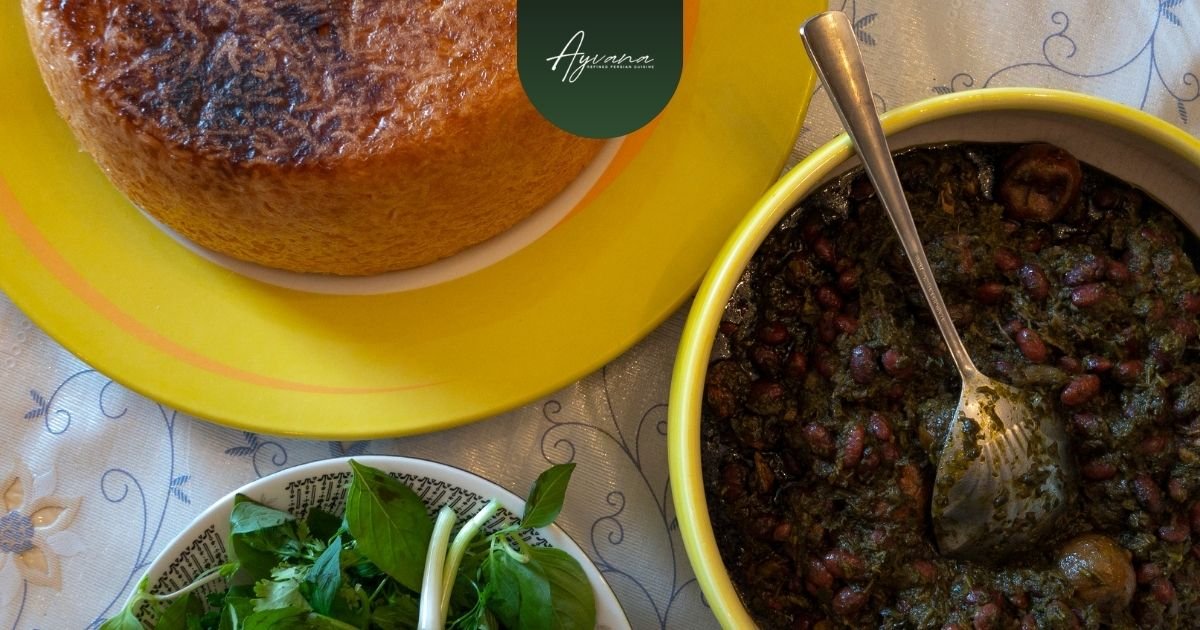
Dried lime is a defining ingredient in many Persian stew ingredients. It contributes a deep, earthy sourness with a slightly fermented citrus note. It is essential in dishes like ghormeh sabzi and plays a key role in creating the tangy character of Persian stews.
Fresh Herbs & Vegetables in Persian Cuisine
Fresh herbs are central to Persian cooking. In many dishes, they are not a garnish but a primary ingredient that shapes the entire flavor profile.
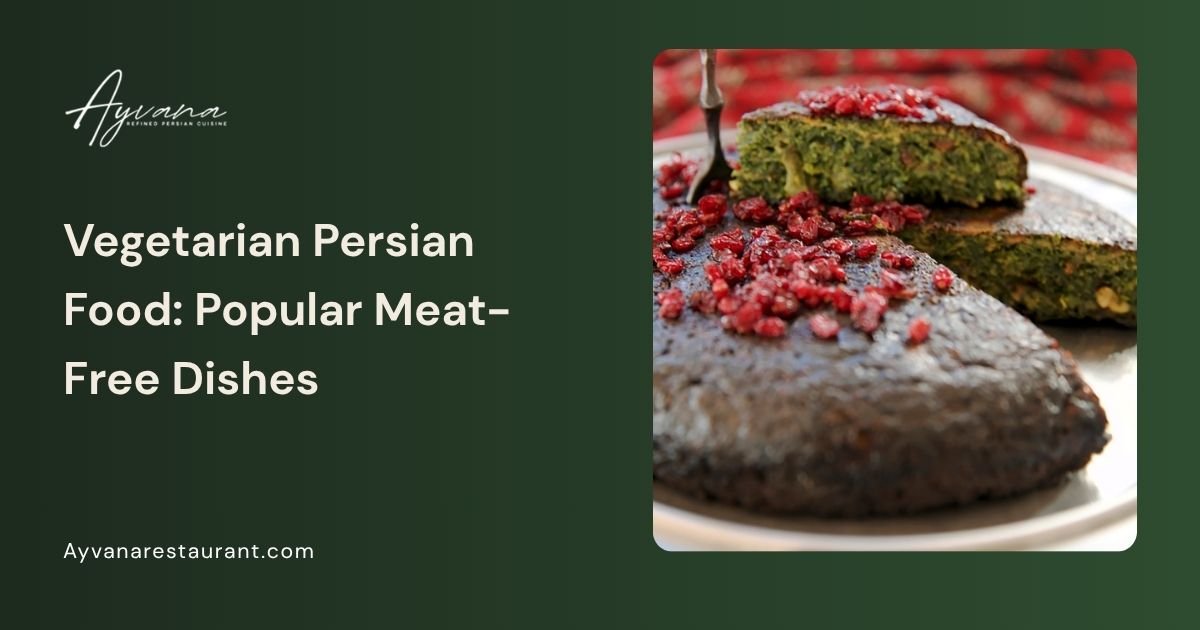
Parsley, cilantro, dill, tarragon, fenugreek, and green onion are commonly used either cooked into dishes or served fresh as part of a herb platter known as sabzi khordan. In dishes like ghormeh sabzi, herbs form the foundation of the stew, while in rice dishes like baghali polo, dill defines the overall aroma.
Vegetables also play an important role. Eggplant, for example, is widely used and prepared in ways that highlight its softness and depth, such as in kashk-e bademjan or eggplant-based stews.
Fruits & Nuts Commonly Used in Persian Cuisine
One of the most distinctive aspects of Persian food ingredients is the use of fruits and nuts in savory cooking.
Ingredients like pomegranate, barberries, sour cherries, raisins, and dried plums introduce sweet and sour contrasts that define many dishes. For example, pomegranate molasses and walnuts are combined in fesenjan to create a rich, sweet-tart stew, while barberries add brightness and color to rice dishes like zereshk polo.
Nuts such as walnuts and pistachios contribute texture and richness. Walnuts are often ground into sauces or stews, while pistachios are used as garnish in rice dishes and desserts.
Staples, Grains & Legumes in Persian Cuisine
Persian cuisine relies on a strong foundation of grains and legumes that provide structure and comfort.
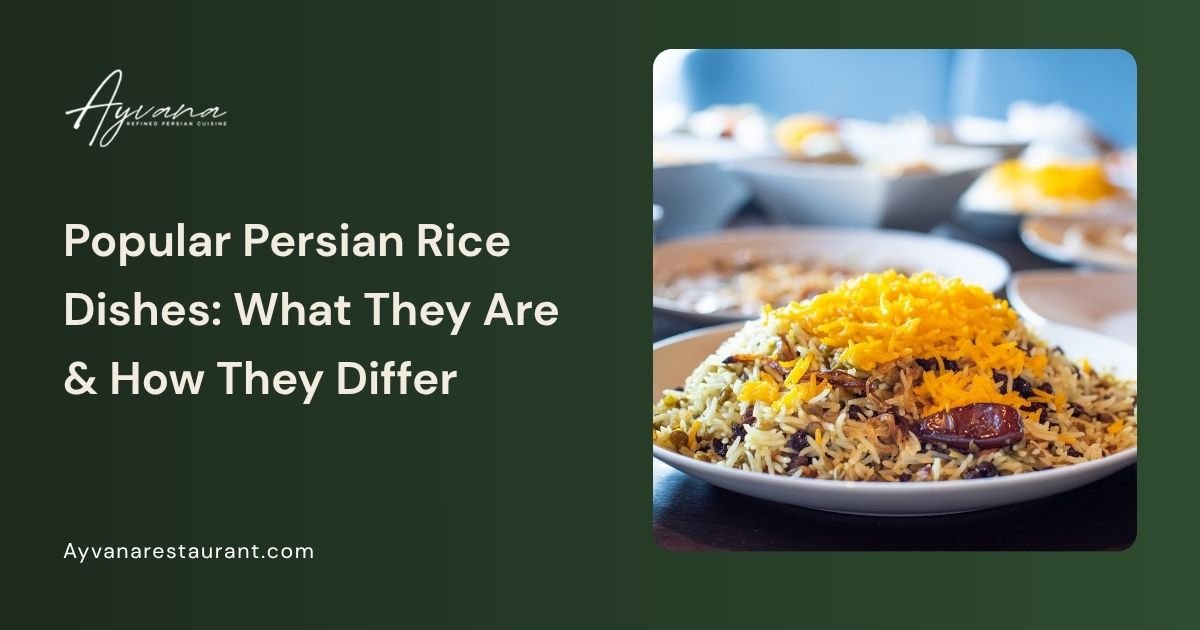
Rice is one of the most important staples. It is prepared with careful techniques that produce long, separate grains and often includes a crispy layer known as tahdig. Rice is not just a side dish but a central part of the meal.
Bread, known as noon, is also widely used, especially in traditional dining and breakfast settings. Legumes such as lentils, chickpeas, beans, and split peas appear frequently in soups, stews, and rice dishes, adding both nutrition and texture.
Dairy & Fermented Ingredients in Persian Cuisine
Dairy ingredients help balance richness and add a cooling element to meals.
Yogurt is widely used as a side dish, dip, or marinade. It complements grilled meats and spiced dishes by adding freshness. Doogh, a yogurt-based drink, is often served alongside meals to enhance the overall experience.
Kashk, a fermented dairy product, is thicker and more concentrated than yogurt. It adds a tangy depth to dishes such as kashk-e bademjan and ash reshteh.
Proteins & Ingredient Pairings in Persian Cuisine
Proteins in Persian cuisine are defined by how they are paired with other ingredients.
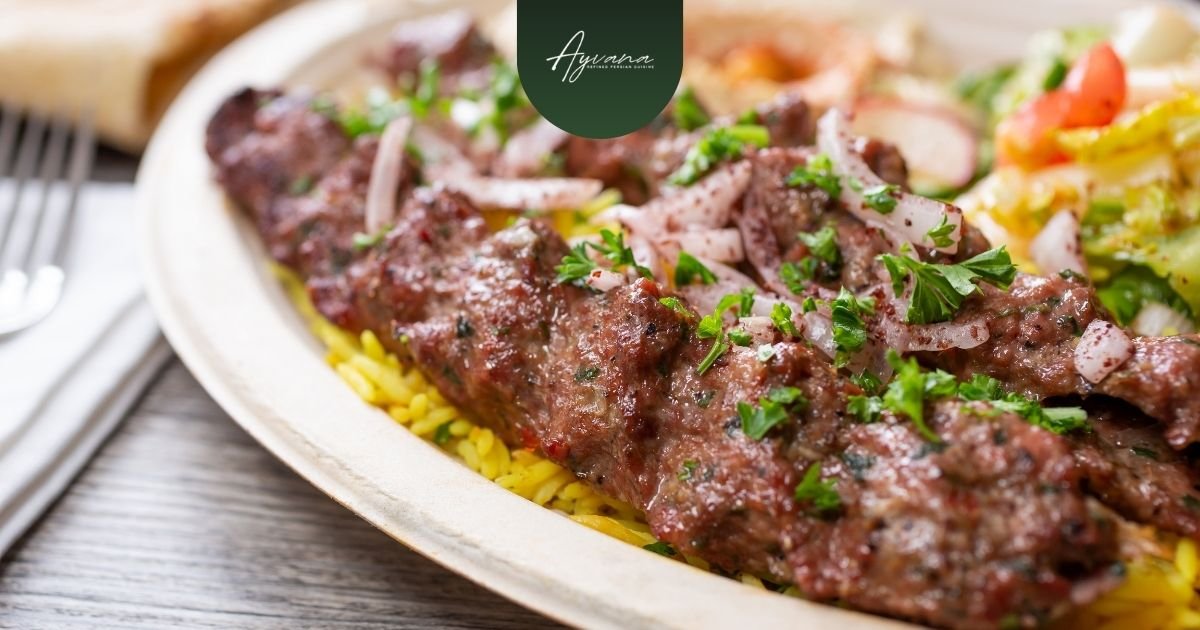
Chicken is often combined with saffron, onion, and citrus for a balanced flavor. Lamb frequently appears in stews and rice dishes, supported by herbs or fruit-based elements. Beef is common in both stews and kebabs, while ground meat is used in koobideh kebabs and fillings.
Fish appears in certain regional dishes, often paired with herbs and citrus. In all cases, the focus remains on how ingredients work together rather than on the protein alone.
Sour, Sweet, and Fragrant Ingredients That Define Persian Flavor
Persian cuisine achieves its signature taste through a balance of sour, sweet, and aromatic elements.
Sourness comes from ingredients such as dried lime, pomegranate, barberries, and sour cherries. Sweetness is often subtle and derived from raisins, dates, or caramelized onions. Fragrance is created through saffron, herbs, and spices like cinnamon.
This combination explains why Persian food is not typically spicy, yet still feels complex and layered. Many dishes carry both savory and slightly sweet notes, which is a defining characteristic of the cuisine.
How These Ingredients Are Used in Popular Persian Dishes
Understanding how ingredients come together in real dishes makes Persian cuisine easier to recognize.
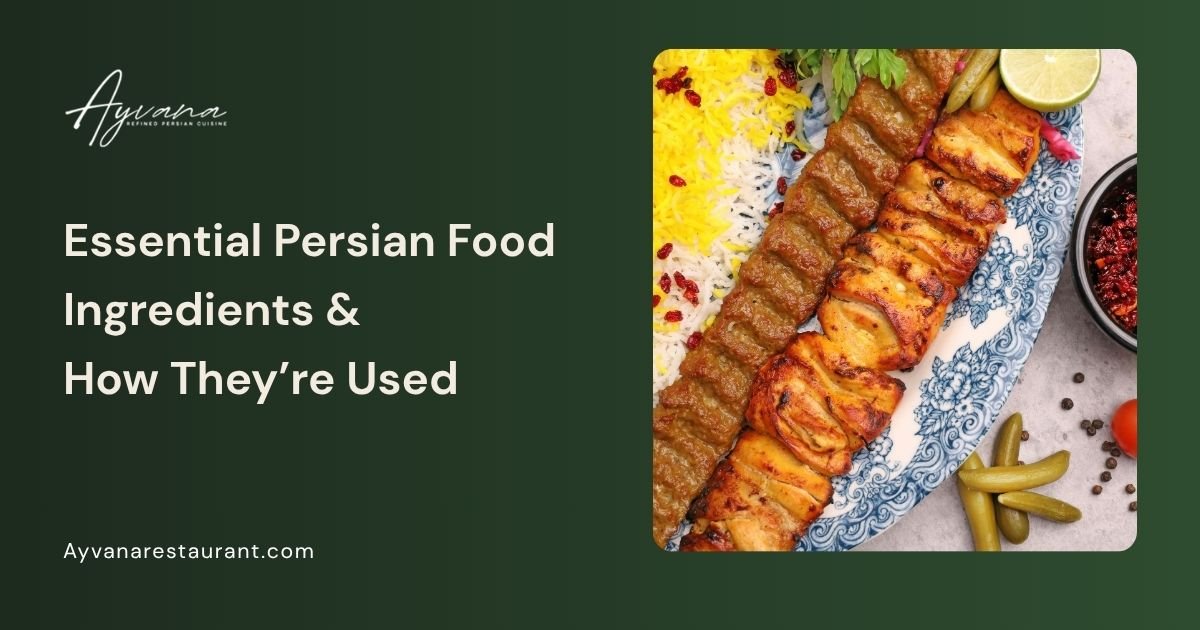
Kebabs typically combine ground or sliced meat with onion, saffron, and sumac, creating a simple but balanced flavor. Stews rely on slow cooking with herbs, legumes, and souring agents like dried lime to develop depth. Rice dishes incorporate saffron, barberries, dill, or butter to create both aroma and visual appeal.
Appetizers and sides often highlight yogurt, eggplant, or fresh herbs, while soups make use of legumes, herbs, and turmeric. These patterns help explain how Persian food ingredients are applied across the menu.
Common Pantry Ingredients vs Fresh Ingredients in Persian Cooking
Persian cooking relies on a combination of pantry staples and fresh ingredients.
Pantry ingredients include rice, dried lime, legumes, and spices, which provide structure and consistency. Fresh ingredients such as herbs, vegetables, and yogurt bring brightness and variation. Together, they create the balance that defines Persian cooking.
How Persian Ingredients Compare With Other Middle Eastern or Mediterranean Cuisines
Persian cuisine shares some ingredients with neighboring regions, but the way those ingredients are used is distinct.
Compared to other Middle Eastern or Mediterranean cuisines, Persian cooking places greater emphasis on herbs as primary ingredients, incorporates fruits into savory dishes more frequently, and treats rice as a central component rather than a side. It also relies more on souring agents like dried lime and barberries instead of vinegar or lemon alone.
These differences give Persian cuisine a recognizable identity without separating it entirely from the broader regional food landscape.
What to Try at a Persian Restaurant if You Want to Taste These Ingredients
If you are new to Persian food, certain dishes offer a clear introduction to its core ingredients.
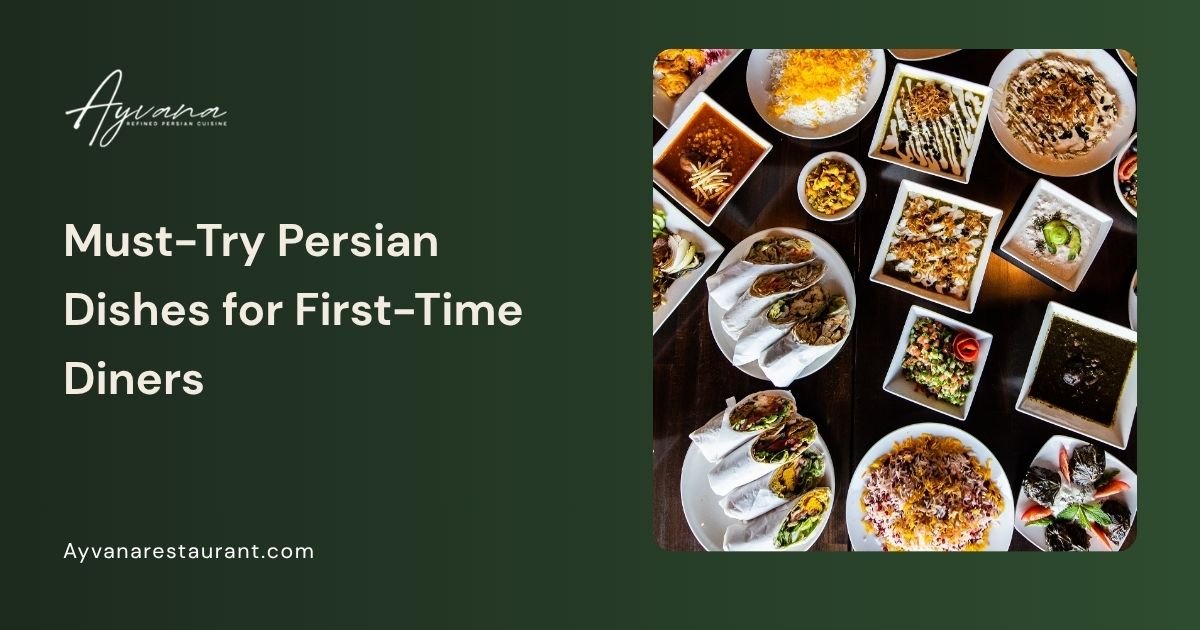
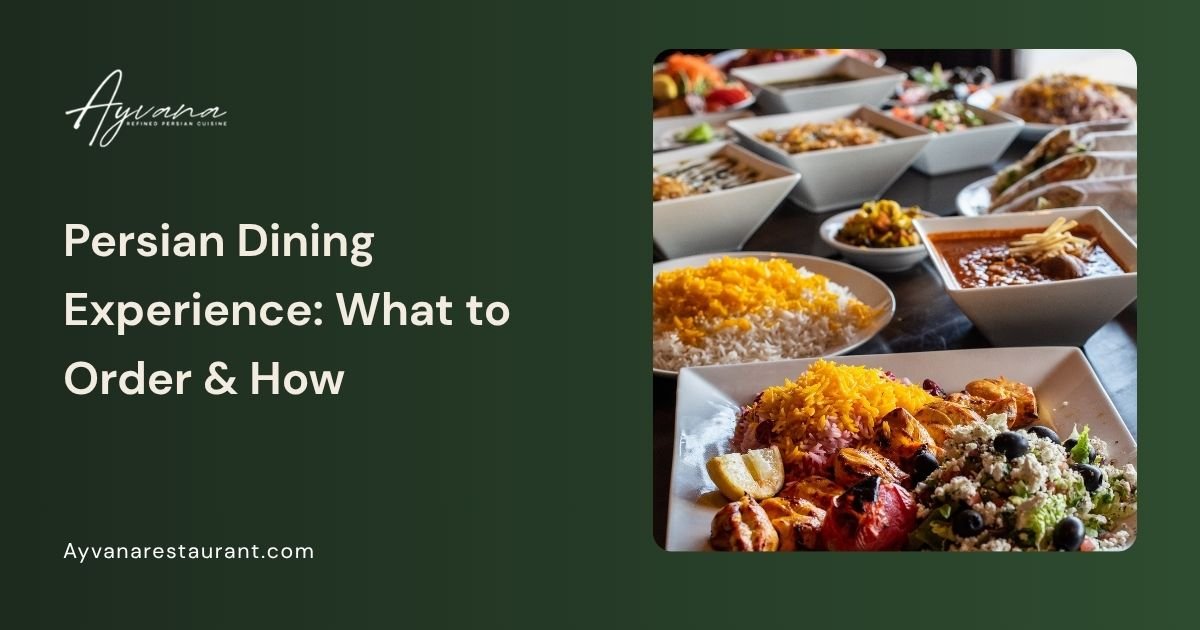
Kebabs provide a straightforward way to experience saffron, onion, and grilled meat. Ghormeh sabzi introduces herb-based cooking and the use of dried lime. Rice dishes such as zereshk polo highlight saffron and barberries, while tahdig showcases Persian rice techniques. Yogurt-based sides help balance the meal and complete the experience.
Try These Persian Flavors at Ayvana Persian Restaurant in Tarzana
If you want to experience these ingredients in real dishes, Ayvana Persian restaurant in Tarzana offers a practical introduction.
The menu includes classic stews, saffron-based rice dishes, and traditional kebabs that reflect the ingredients discussed in this guide. For first-time diners, it provides an accessible way to understand how Persian food ingredients come together in complete meals. Rather than reading about these flavors, visiting allows you to experience them directly.